


Better monitoring needed for pollutant-free European seas
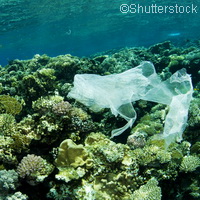
In the latest Marine Board-European Science Foundation (ESF) Position Paper, experts point out how more work needs to be performed on the monitoring and regulation of chemical pollution in Europe's seas. 'Monitoring Chemical Pollution in Europe's Seas: Programmes, Practices and Priorities for Research' provides fresh insight on how regulatory frameworks and monitoring programmes fail to address the full range of potentially damaging pollutants. They also ignore many of the 'new' pollutants being used by industry. Pollution is the biggest concern for Europeans. This finding is an outcome of the CLAMER ('Climate change and marine ecosystem research results') project, which polled more than 10 000 people from 10 European countries on what they consider to be the most significant issues putting the marine environment at risk. CLAMER was funded under the Environment Theme of the EU's Seventh Framework Programme (FP7) to the tune of almost EUR 1 million. The paper also notes how public concern is justified, particularly because it is supported by scientific evidence. Data show that approximately 30 000 of the chemicals available on the EU market have a production volume higher than 1 tonne each year. Seas, rivers and estuaries are the recipients of the growing number of substances that can adversely affect processes, ecosystems and marine organisms. The EU believes oceans and seas are strategic points, playing instrumental roles on both economic and social fronts. Meanwhile, marine ecosystems are increasingly feeling the pressure from human activity, with chemical pollution playing havoc more than ever. 'The level of knowledge and awareness of the presence and potential impacts of new and emerging marine pollutants is still very limited,' says working group co-chair Patrick Roose from the Belgian Management Unit of the North Sea Mathematical Models (MUMM) in Belgium. For his part, co-chair Colin Janssen from the University of Ghent in Belgium says: 'To be genuinely effective, monitoring programmes will need to be dynamic and take into account a continually expanding list of chemical pollutants, the impact that different pollutants can have on organisms, ecosystems and processes, and to attribute efforts and resources according to the perceived risk.' The paper points out that there should be better cooperation, coordination and harmonisation between the monitoring efforts currently in use and those that are being developed. Taking these steps will help ensure that efforts are not replicated, expertise is not lost and that people will work to meet the standards found across the region. Furthermore, sophisticated and more integrated environmental risk assessment procedures are needed in order to assess how chemical substances are affecting the various compartments of coastal and open sea systems. 'Until today, the monitoring of European seas has been largely based on the measurement of chemical concentrations in water, sediments and biota,' explains Marine Board chair Kostas Nittis. 'As such, they are failing to take sufficiently sophisticated approaches to gain insights on the true impacts of chemicals on individuals, populations and whole marine ecosystems. Until a more scientifically robust and sophisticated approach is adopted, existing monitoring programmes are only providing a part of the picture.'For more information, please visit: CLAMER:http://www.clamer.eu/Environment Research in FP7:http://cordis.europa.eu/fp7/environment/home_en.htmlTo download the Marine Board-ESF Position Paper 16, click:http://www.marineboard.eu/images/publications/Monitoring%20Chemical%20Pollution-71.pdf
Countries
Belgium