A modular approach to in-orbit space operations

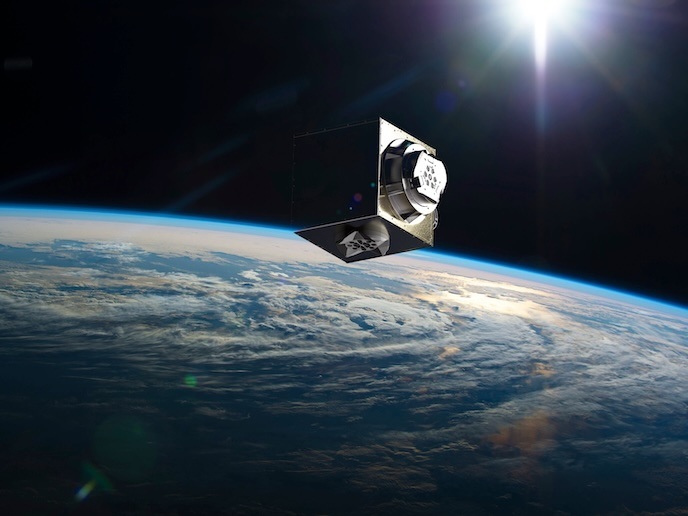
Orbital replacement units (ORUs) are modular components for space systems, such as pumps and battery packs, that are designed to be replaceable or upgradeable after launch. Emerging ORUs could offer a broader range of uses including deorbit kits and energy storage modules, alongside docking interfaces to support autonomous satellite reconfiguration and maintenance. “Autonomous lightweight ORUs could help deep-space operations overcome the challenges of limited resupply options, enhancing the flexibility and sustainability of space operations at reduced cost,” says Javier Vinals, project coordinator of the EU-supported ORU-BOAS(opens in new window) project. “But hurdles remain, including interoperability, modularity and sufficient technology readiness.” The project, a consortium of six European partners, designed and validated three complementary ORU concepts, closely aligned with the needs of the European Commission’s In-Space Operations and Services(opens in new window) programme. “Our concepts, underpinned by modular architecture, pave the way for the on-orbit servicing requirements of future EU missions and satellite construction,” notes Vinals, an engineer and project manager at Sener Aerospace(opens in new window).
Modular space components on open architecture
The team built three modular concepts. The first was a platform to allow spacecraft to handle ORU payloads, with standardised interfaces for module-to-module communication, mechanical attachment and robotic docking(opens in new window). The second concept supported the EROSS IOD satellite repair project with the development of two ORU configurations for robotic support services. The third concept was a suite of autonomous interface solutions for future rendezvous and docking applications. These ORU concepts were developed using open-source architecture, to maximise interoperability, scalability and flexibility, and simplify upgrades. “Open architecture reduces costs by standardising and reusing components, while still encouraging innovative upgrades, similar to the app marketplace,” adds Vinals.
Validation of ORU building blocks
Functional tests confirmed that the ORU-BOAS platform’s avionics and power management systems met performance requirements. Modelling carried out at Sener’s facilities in Spain demonstrated the ability to integrate various payloads, including the Micro-CETUS deorbit kit (controlling re-entry and safe disposal of components such as thrusters and propellant tanks), alongside high-power energy storage modules. Simulations of robotic docking operations between ORU modules equipped with SIROM interfaces such as mechanical coupling, power and data transfer cables, and the capture-before-contact docking mechanism were carried out by the German Aerospace Center(opens in new window) (DLR), one of the project partners. Contactless docking was achieved with one centimetre of separation between the modules, “validating the feasibility robotic service scenarios, while reducing the risk of disturbing spacecraft or satellites which are unattached to structures or launch vehicles,” explains Vinals.
Better stewardship of space operations
ORU-BOAS’s achievements support the EU’s ambitions for space operations which are both more competitive and more sustainable, extending the operational life of spacecraft and so reducing the accumulation of space junk(opens in new window). “Extending the life of satellites and rapidly updating facilities such as Earth observation will benefit both citizens and the environment, improving climate monitoring, disaster management and resource management services,” says Vinals. The team is now following the project’s plan to translate their lab-validated technologies into in-orbit demonstrations, while also developing guidelines for future modularised satellite architectures.