Computer-optimised mooring design for floating wind turbines

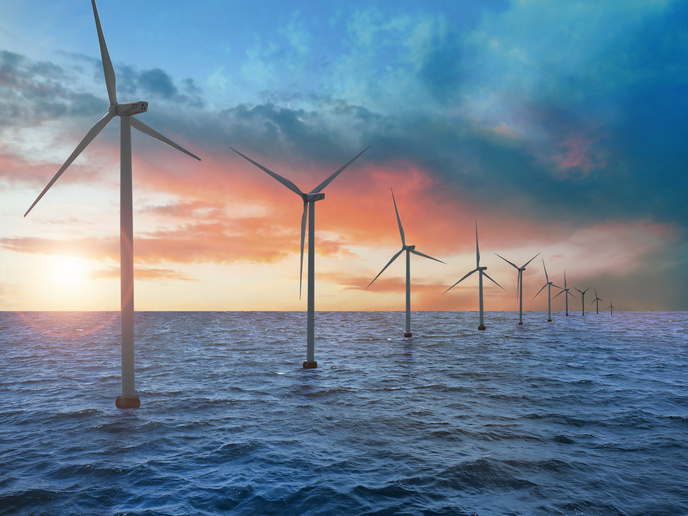
Floating offshore wind turbines could be contributing more to the fight against climate change, by tapping into the significant wind energy available in deeper waters. One impediment is that at these depths traditional wind turbine moorings are not feasible, largely due to their length, making bottom‐fixed foundations difficult to install and maintain. In contrast, floating turbines are by definition movable, and so deployable in a wider range of locations, meaning they can tap into stronger, more stable offshore winds. However, floating wind turbines still present a range of engineering challenges. “Their structures interact in complex ways with the ambient air and water, while the mooring system’s interaction with the seabed is particularly complicated. Consequently, floating solutions are typically more costly and technically demanding than bottom-fixed turbines,” explains Shengjie Rui(opens in new window) lead Marie Skłodowska-Curie Actions(opens in new window) (MSCA)researcher from the MLSITDAIAFWT project, which used computer modelling to inform better floating wind turbine mooring designs. The project was especially interested in establishing how mooring line and seabed interactions can result in trenches that reduce anchor capacity.
The first accurate computer model of anchor loads
The MSCA-funded MLSITDAIAFWT team combined laboratory experiments with computer simulations at the Norwegian Geotechnical Institute(opens in new window), the project host, and partner the Norwegian University of Science and Technology(opens in new window). Laboratory tests, called chain-bar penetration tests, were first performed to study how clay seabeds deform and erode due to the repeated movement of mooring components. “The key finding was that the moving structures repeatedly cut and disturb the soil, softening the clay and reducing the seabed’s integrity and strength, forming trenches,” adds Rui. Combined with data from published literature, these laboratory results were used to calibrate a numerical model of mooring line–seabed interactions. This data was then input into the SIMA software(opens in new window), enabling integrated system analyses of these interactions to be made. Measurements showed that the embedded portion of a mooring line significantly alters the tension at both the fairlead (fitting guiding the chain) and the padeye (stainless steel plate and ring to secure the chain), affecting the overall performance of the mooring system. “To my knowledge, this is the first model that lets designers directly compute anchor loads as part of system-level analyses, while accounting for embedded line effects. Our study will ultimately help improve the reliability of mooring systems, bringing maintenance costs down and making floating wind turbines more feasible,” says Rui.
Supporting clean energy ambitions and marine innovation
By ensuring that floating wind technology is more reliable, MLSITDAIAFWT’s work boosts large-scale renewable energy generation in deep waters, helping reduce CO2 emissions and dependence on fossil fuels, in support of the EU’s clean energy(opens in new window) ambitions. “With applications – including commercial floating wind farms, hybrid offshore energy systems and advanced mooring solutions for ocean infrastructure – the technology also stimulates ocean engineering innovations, while encouraging broader development of marine resources,” notes Rui. Having already presented project findings at a series of events, including a plenary lecture at a major international conference in France(opens in new window), Rui is now directly applying the project’s model to floating wind turbine design, validating performance in real engineering scenarios. “If the model consistently improves design accuracy and efficiency, the project’s methods and findings may be incorporated into industry standards and design guidelines for floating wind mooring systems,” says Rui.