Preparing for the future of Europe’s peatlands

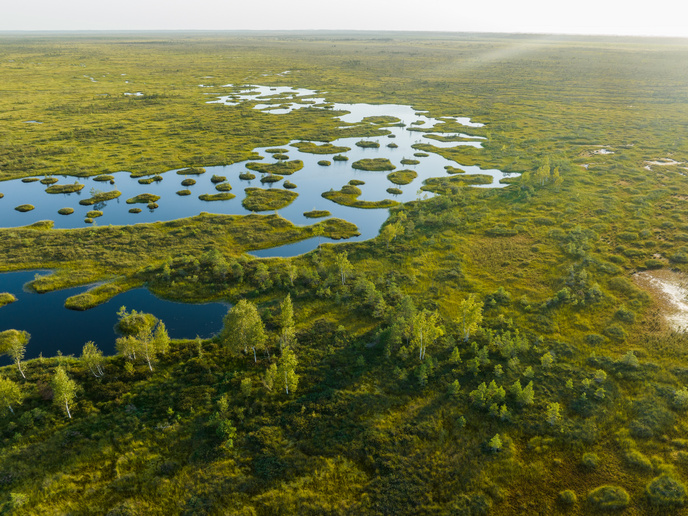
A recent study(opens in new window) carried out by the EU-funded WaterLANDS(opens in new window) project has found that only 7 % of Europe’s original peatlands still exist today. What is more, climate change is expected to greatly affect peatland functioning, with conservation and restoration more likely to be effective in cooler and wetter regions of northern Scandinavia, Ireland and Scotland and in mountainous areas.
Why peatlands are so important
Peatlands’ waterlogged conditions cause plants to decompose more slowly, over time leading to a build-up of layers of organic matter called peat. Although these unique wetland ecosystems cover less than 3 % of land across the globe, they are able to store double the amount of carbon that the world’s forests can. Conserving them is therefore vital to prevent massive amounts of carbon from returning to the atmosphere, and as climate-driven shifts reshape ecosystem boundaries, making smart restoration choices has never been more critical. The researchers explored how climate change may shift peatland ranges in Europe. They linked current peatland locations to climate patterns and projected future changes under two climate change scenarios: a Paris-aligned scenario and a 3 °C warming scenario. Study lead author Enahu Tahitu of WaterLANDS project partner Wageningen University, the Netherlands, discusses the worrying findings in a ‘Phys.org’ news item(opens in new window): “We have lost most European peatlands,” Tahitu states, going on to explain that about 93 % of European peat soils no longer have ecologically functional peatland ecosystems. “This massive loss largely results from the peat extraction and agricultural conversion that contributed to building economic prosperity across the central lowlands of the continent.” The remaining 7 % of Europe’s peatlands are expected to face greater climatic pressure, with climate conditions remaining best in parts of northern Scandinavia, Ireland and Scotland and at higher elevations on the European mainland. With 3 °C warming, the research showed that 92 % of today’s functioning peatlands will likely experience less suitable climates by 2050, and the share facing clearly unfavourable conditions would nearly triple, rising from 6 % to 15 %. “Conserving and restoring what we have left is urgent—not only for our climate, but also for local communities,” concludes study co-author Juul Limpens, also from Wageningen University. “Degraded peatlands are vulnerable to drought, wildfire and erosion, which will directly impact air and water quality and future water supplies for human beings. We have identified the priority areas to work on in the coming years.” Commenting on the localised and fragmented nature of previous wetland restoration efforts, WaterLANDS (Water-based solutions for carbon storage, people and wilderness) project lead Craig Bullock of University College Dublin, Ireland, states: “We aim to co-create restoration at scale, based on ecological, social, governance and financial best practices, to connect habitats and communities across Europe, ensuring both thrive for many generations to come. The continental analysis of the distribution of historical and current peatlands, conducted by the team at Wageningen University, represents a major contribution in this direction by enabling us to identify where to prioritize our efforts.” For more information, please see: WaterLANDS project website(opens in new window)