High-frequency oscillations could help cure epileptic seizures

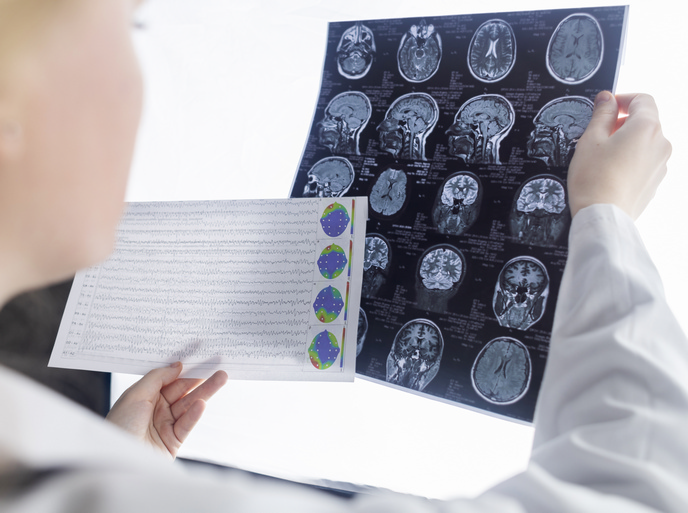
Epilepsy is a lifelong neurological disorder caused by sudden bursts of abnormal electrical brain activity and characterised by recurrent momentary lapses of awareness, muscle jerks or prolonged seizures. It is one of the most common neurological conditions. While antiseizure medication can stop some seizures, the underlying epileptic activity can still cause harm, impairing memory in adults or cognitive development in children. Medications also have side effects and some patients continue to have seizures despite taking them. “Epilepsy surgery offers a real cure, if the epileptic brain tissue can be clearly identified, allowing the surgery to effectively remove all of it,” says Maeike Zijlmans(opens in new window), coordinator of the EU-funded Epilepsy_Core project. The project has helped improve surgical outcomes by pinpointing the epileptic brain based on electrical activity detectable during surgery. “We advanced the use of the relatively old method of intraoperative electrocorticography, improving both the recording and analysis of the brain’s electrical activity,” explains Zijlmans, from the University Medical Center Utrecht(opens in new window) (UMC Utrecht), the project host.
Tapping the information held in the brain’s electrical signals
The inspiration for Epilepsy_Core, which was funded by the European Research Council(opens in new window), was in developing a way to tap the brain’s electrical signals for information about the source of epileptic activity. “While electroencephalography(opens in new window), or EEG, can record brain activity from the scalp, electrical signals can also be recorded directly from the brain. While this can be done during seizures, it is difficult to delineate the diseased tissue. Detection during surgery could directly guide the neurosurgeon,” notes Zijlmans. Yet, responding surgically to unpredictable and rapid-onset seizures is clearly not a viable strategy, so the team leveraged a key discovery. In between seizures, so-called ‘interictal epileptiform discharges’, linked to the location of epileptic tissue, are detectable. While these discharges occur beyond the epileptic tissue, it was discovered that when the frequencies of invasive EEGs are reviewed above 80 Hz (or even 250 Hz(opens in new window) – higher than normal – these signals help pinpoint the epileptic area). But the amplitudes(opens in new window) of high frequency oscillations are small and they occur randomly, so the Epilepsy_Core team had to improve their recording and analysis. “Because the epileptic brain activity occurs over tiny areas, it is easily missed when recorded using typical low-density electrode grids, with electrodes spaced 1 cm apart. So, we tested high-density electrode grids with four times the electrodes, picking up about 25 % more high-frequency information,” explains Zijlmans. Flexible electrode grids were designed to record in narrow surgical spaces in the brain – especially to verify if all epileptic tissue has been removed. “Encouragingly, we also discovered that electrical stimulation could actually evoke high-frequency oscillations, avoiding the need to wait for them to occur naturally. However, direct intraoperative implementation will be challenging,” adds Zijlmans.
Getting closer to a surgical cure for epilepsy
To get closer to a surgical cure, the team reviewed a range of signal features which yielded further promising discoveries. For instance, high-frequency band spectral entropy (unpredictability at higher frequencies) is easy to compute, with high spectral entropy variations indicating epileptic activity. Using machine learning to analyse these electrocorticography signal features can confirm people will be seizure-free after surgery. “Our research also contributes to the stock of general knowledge about epilepsy, for example further revealing how epileptic activity negatively impacts cognitive functioning, irrespective of seizures, and clearly linking epileptic activity to inflammation markers in the underlying tissue,” adds Zijlmans. To get closer to a clinical product, the team will further study the signals using more advanced machine learning techniques, along with further developing the flexible electrode grids and stimulation methods.