Searching for the origins of organic matter in asteroids

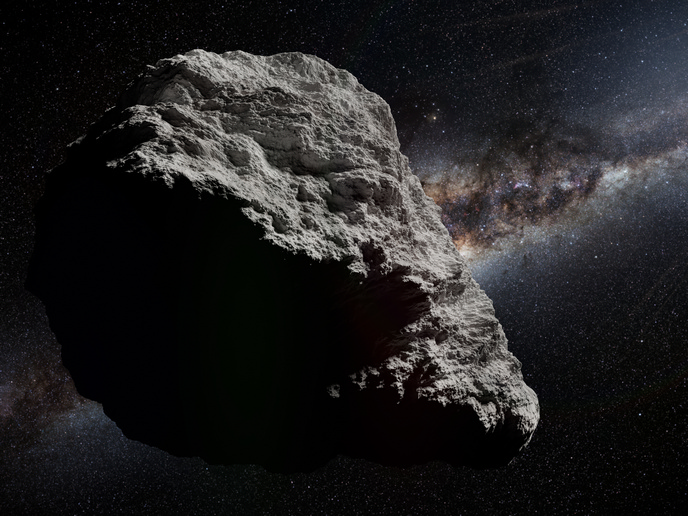
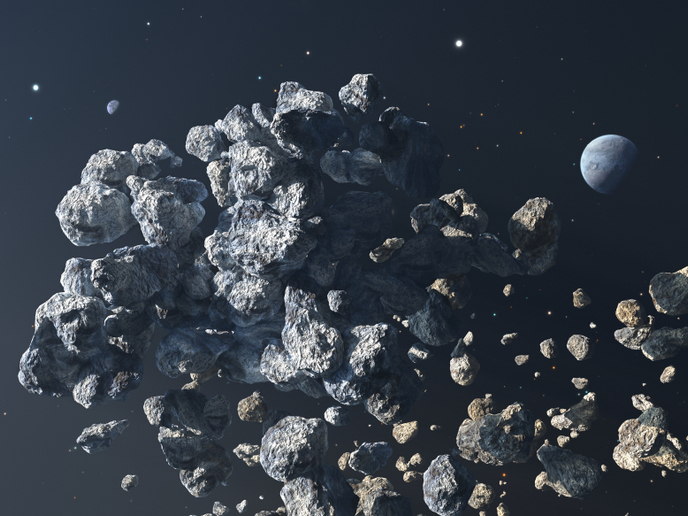
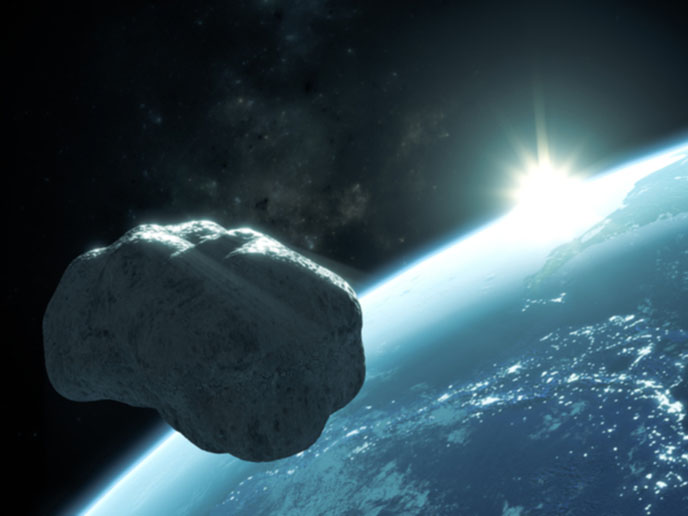
Asteroids are small rocky leftovers from the formation of our Solar System around 4.6 billion years ago. Drifting in orbit around the Sun, most stay within the confines of the asteroid belt between Mars and Jupiter. But occasionally, pieces of them reach the surface of Earth. A small fraction of these are known as carbonaceous chondrites (CCs), and originate from carbon-rich asteroids. “Carbonaceous chondrites are quite rare meteorites; they account for less than 5 % of the extraterrestrial objects we have in collections,” explains Laurent Remusat(opens in new window), senior researcher at the National Centre for Scientific Research(opens in new window) (CNRS) in France. Organic compounds in CCs exhibit a wide range of hydrogen (H) and nitrogen (N) isotope compositions, which can tell us about the environment in which they were formed. The exact nature of the processes that formed organic compounds in CCs is still debated. More study could uncover details about the origin and evolution of organic matter in our Solar System – and life on our planet, as these compounds were delivered at the surface of the prebiotic Earth. In the HYDROMA(opens in new window) project, which was funded by the European Research Council(opens in new window) (ERC), Remusat and his colleagues investigated the evolution of H and N isotope ratios in a collection of CCs, to decipher how their organic matter was altered through time. “Assessing the origin and evolution of extraterrestrial organic matter provides insight about components that could have influenced the emergence of life,” says Remusat.
Studying isotopes in extraterrestrial organic compounds
Remusat’s project focused on studying extraterrestrial organic matter in natural and experimental samples. The project used an innovative experimental investigation of the processes at play in asteroidal environments, studying how fluid circulation and the occurrence of some minerals may have affected molecules such as polycyclic aromatic hydrocarbons (PAHs), nucleobases, amino acids or macromolecular insoluble organic matter. “We compared conclusions derived from these experiments with measurements in natural objects to better understand the impact of fluid circulation on asteroids during the first million years of the Solar System, and to determine if some molecules could have preserved their synthesis signatures,” adds Remusat.
Intricate findings about the origins of organic matter
The team found that some organic molecules swap H isotopes more than others, depending on their molecular structure. Some aromatic compounds can lose their isotopic signature even if they do not change chemically. Larger molecules were found to be more resistant to water and better preserve their signature, suggesting they are a good target for identifying the origin of organic molecules. “Last but not least, the presence of minerals, and specifically clay minerals, can influence the evolution of organic molecules,” notes Remusat.
Digging deeper into the influence of clays
Though the project has ended, the research will continue. The team is still investigating the influence of clays on organosynthesis under asteroidal conditions, specifically the links between clays and organic molecules in Oued Chebeika 002(opens in new window), a newly discovered meteorite. Motivated by the findings of the project, Remusat submitted another ERC project proposal, focusing on the evolution of position-specific isotope composition in organic matter under geological conditions. “The goal is to set a robust isotope proxy to distinguish abiotic from biotic organic matter in old rocks,” he says.