Pioneering hybrid brain regeneration techniques

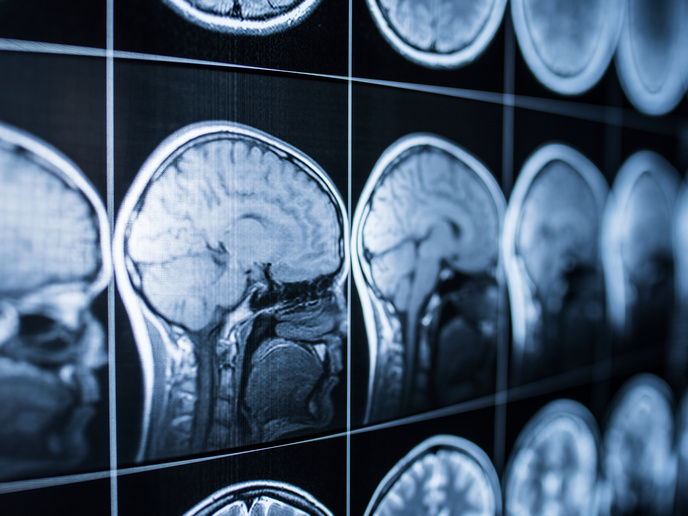
While it is possible to regenerate parts of the body such as skin, bone and cartilage, rebuilding brain tissue is far more challenging. Current treatments for brain conditions such as epilepsy as well as brain damage therefore tend to address only symptoms rather than any underlying cause. One way of regenerating brain tissue could be to graft stems cells to the host brain. The idea is that these would then become fresh healthy neurons. This approach is risky however for a number of reasons. For a start, stem cells have the potential to proliferate quickly, potentially growing into a mass or turning into a tumour.
Biohybrid brain tissue grafts
The idea behind the HERMES(opens in new window) project, coordinated by the Italian Institute of Technology(opens in new window) (IIT) in Italy, was to develop a system whereby stem cell grafts could be controlled with engineered devices, thus offering more stability and certainty. If achievable, this could open the door to viable brain tissue transplants. “My idea here was to develop a truly biohybrid brain tissue graft that combines a biological component with an engineered neuromorphic device, and an AI component to guide the process,” explains project coordinator Gabriella Panuccio. “The AI component trains the device until it learns how to ‘manage’ the biological graft in the brain. The AI and neuromorphic device would then be ‘unplugged’, once the brain has healed.”
Model hosts, model grafts and AI systems
Demonstrating this concept however proved to be extremely challenging. On the in vivo side, a specific minimally invasive neurosurgery technique had to be developed, to enable the injection of stems cells and biomaterial in fluid form at the right site. “This was a culture of stem cells committed to becoming hippocampal neurons,” says Panuccio. Pilot experiments in animal models nonetheless helped the team to outline neuromodulation strategies (i.e. ways of modifying nervous system activity through electrical stimulation). At the same time, in vitro technology enabled Panuccio to demonstrate how her biohybrid approach might work in practice, with the model host, model graft, neuromorphic device and AI system working in harmony. The AI developed was a multiagent system, with different components serving different purposes, but all communicating with each other. “A key milestone was getting the whole biohybrid architecture up and running,” she notes. “This was not easy, as commercial technology was not readily available to support this early-stage research.”
External biohybrid constructs
In vitro demonstrations showed how the various components of the biohybrid system communicate and work together, with the AI component tuning the parameters of the neuromorphic device in real time during electrical stimulation-mediated interaction between graft and host. “Brain regeneration research is still at a very early stage,” adds Panuccio. “There are still difficulties with stem cell grafting and differentiation, as well as a number of open questions. For example, two model graft types were developed in this project – one proved epileptogenic (generating seizures), the other non-epileptogenic. Why is this the case? And will the non-epileptogenic graft become epileptogenic once grafted into an epileptic brain?” As an intermediate step, Panuccio believes that an external biohybrid construct could be used, to better understand how communication between the brain and any potential biohybrid graft might work. Panuccio has also gone on to launch Neurotronika(opens in new window), a med-tech startup focused on applying symbiotic neuromodulation for epilepsy treatment.