Redesigning photosynthesis to boost crop productivity

Photosynthesis – the process by which plants, algae and some bacteria use sunlight, water and carbon dioxide (CO2) to create their own food – is fundamental to life on Earth. The process is also critical to maintaining oxygen levels in the atmosphere. An interesting thing to note is that photosynthesis evolved at a time when CO2 levels on Earth were much higher. Over millions and millions of years, CO2 levels have dropped, in part due to plant activity (oxygen is a byproduct of photosynthesis). The result is that photosynthesis is not as efficient as it once was.
Addressing food security and quality
One reason that this has piqued the curiosity of scientists is that food security and quality have become major global issues. Climate change is impacting agricultural practices, and many regions in the world are looking at ways to increase biomass efficiently and sustainably to feed growing populations. This is where the idea of improving photosynthesis in plants comes in. “People have been working on this for decades,” explains PhotoBoost(opens in new window) project coordinator Stefan Schillberg from Fraunhofer IME(opens in new window) in Germany. “One focus has been RuBisCO, a central photosynthetic enzyme that turns carbon dioxide into sugars but also reacts with oxygen, wasting energy.” The PhotoBoost team were interested in manipulating enzymes involved in photosynthesis to make the mechanism more efficient. A number of synthetic biology and metabolic engineering approaches were applied, including the integration of an algal carbon-concentrating mechanism and an oxygen scavenging mechanism.
Achieving higher potato and rice crop yields
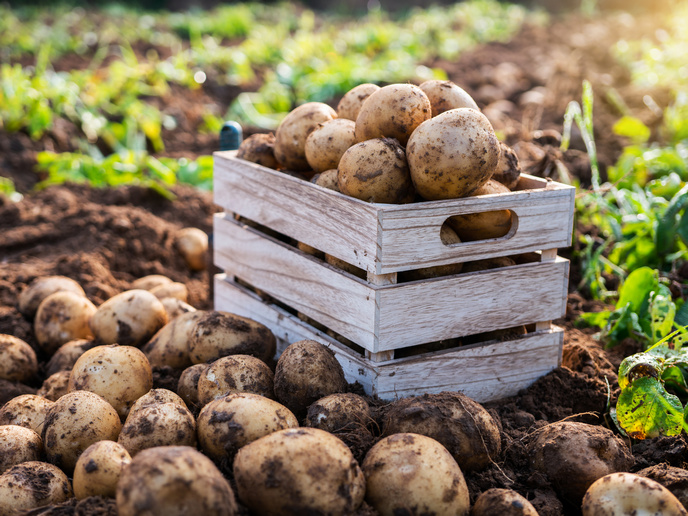
One successful method was the manipulation of a carbon concentration mechanism involving different enzymes and proteins. Four proteins in the mechanism were identified, with one in particular the focus of the research. The ultimate aim was to significantly improve photosynthesis to increase biomass, especially in the parts of plants that are consumed, such as potato tubers and rice kernels. “It was important that we demonstrated these techniques not just in greenhouses but in open field,” says Greta Nölke, the lead scientist involved in PhotoBoost. “Field trials were carried out in Germany, Spain and the Philippines.” The project was able to demonstrate yield gains far exceeding those achieved through conventional breeding methods. Under near-field conditions, potato crops carrying the most promising photosynthetic enhancements achieved up to 42 % higher yields, while rice achieved yields up to 33 % higher.
Boosting climate-resilient agriculture
These results demonstrate that photosynthesis has the potential to be successfully ‘rewired’ using biotechnology to deliver substantial, stable yield improvements. Such approaches could one day be used to support climate-resilient agriculture, enabling higher productivity in the face of climate change and growing global food demand. Next steps include transferring these photosynthetic enhancement strategies to other crops. One example is cowpea, a key staple pulse in parts of Africa, which is now the focus of a new project supported by Gates Agricultural Innovation. “We are also interested in analysing the effects of this technology in the field,” says Schillberg. “If we were producing crops with more biomass, what does this mean in terms of water, nutrients and fertiliser use? Also, what does this mean in terms of nutritional quality?” Schillberg and his team are keen to continue exploring these and other questions, with a long-term view of boosting global agriculture in a sustainable manner.