


The future of gearbox monitoring in wind turbines is light-based


By providing real-time insights into gearbox performance, our system tackles key industry issues such as poor visibility into actual loads, unexpected failures and suboptimal farm operations.
Eric van Genuchten, GearUp project coordinator
Wind turbine gearboxes are vital components connecting the slow-moving blades of a wind turbine to the high-speed generator, thereby enabling efficient electricity production. By increasing the rotational speed of the blades, the gearbox ensures that the generator operates at optimal levels. Yet, diverse factors including fluctuating turbine loads and environmental stress can cause unexpected gearbox inefficiencies or failures. Monitoring these gearboxes is essential to improve reliability, reduce downtime and optimise energy production. In an effort to address these challenges, the GearUp(opens in new window) project is developing a photonics-based system for monitoring gearbox load and torque. Created through a joint venture between Sensing360(opens in new window) and Sentea(opens in new window), and funded by the EU through Horizon Europe(opens in new window), RVO(opens in new window) and VLAIO,(opens in new window) this innovative solution supports the entire wind turbine lifecycle, from design validation to wind farm operation. “By providing real-time insights into gearbox performance, our system tackles key industry issues such as poor visibility into actual loads, unexpected failures and suboptimal farm operations,” notes project coordinator Eric van Genuchten.
‘Illuminating’ gearbox health in real time
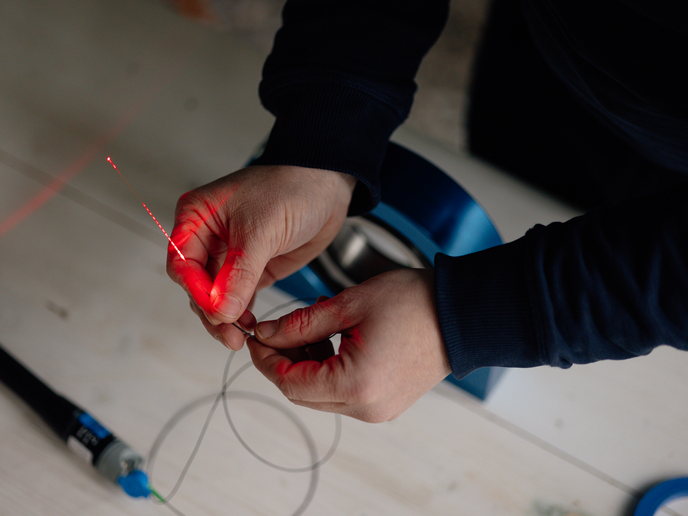
The GearUp system consists of an integrated photonic chip with an embedded control unit (interrogator) that processes the data (such as load, torque) collected by the chip. This set-up enables the system to take extremely precise and fast measurements. Specifically, it can measure changes in the gearbox at a rate of 20 kHz for each fibre sensor it uses. The accuracy of these measurements is incredibly high, down to 1 picometre, ensuring that even the tiniest changes in the gearbox’s load or torque can be detected in real time. The system works by using a special type of sensor: a fibre Bragg grating. "These tiny optical sensors embedded in the fibre are directly taped around the gearbox to measure strain and temperature,” says van Genuchten. “When the gearbox experiences changes in load or stress, the light travelling through the fibre changes slightly. The photonic interrogator detects these shifts in the light at high sampling rates and translates them into useful data, such as how much torque or load the gearbox is under, how well the load is being shared, and even the gearbox’s speed and operating temperature,” he explains. “The result is a simple, all-in-one sensor system that is easy to install and capable of turning real-world physical operations into actionable digital data. Given that signals are optical, the system is immune to electromagnetic interference and lightning – a big advantage for wind turbines operating in challenging environments,” adds van Genuchten.
Lower repair costs, higher energy output
This technology brings significant benefits to the wind energy sector. “By monitoring torque, load and planetary load-sharing indicators, the system can identify potential problems before they escalate. For example, it can reduce the cost of a major EUR 500 000 gearbox repair by enabling a smaller fix for EUR 250 000,” states van Genuchten. The system also provides accurate, real-time data on true loads, enabling better in-turbine control and load balancing across the wind farm. These can extend the lifetime of turbines by 10-20 % and increase energy output at the farm level by up to 7 %. As the first industrial application of photonics for wind turbine gearboxes, GearUp enables optimised gearbox design, validation, commissioning, maintenance management and wind farm operation. Designed to be cost-efficient, the system meets a target selling price of EUR 5 000, making it accessible for widespread adoption. Following the project completion, the next steps include obtaining CE and PLC certifications over the next few months. Beyond wind energy, the GearUp system has significant market potential in industries such as oil and gas, marine, automotive and heavy machinery, where similar planetary gearboxes and bearings are used. The consortium brought together Sensing 360 and Sentea, co-funded by Horizon Europe, the Dutch Enterprise Agency (RVO) and Flanders Innovation and Entrepreneurship (VLAIO).