From climate change to metabolic change in fish

As a direct consequence of climate change, Europe’s oceans and seas are getting warmer and losing oxygen. While both trends have a direct impact on marine ecosystems, most research looks at these two stressors in isolation. But doing so may not fully capture the actual environmental conditions fish experience in nature. “What’s needed is a more comprehensive approach, one that looks at how ocean warming and deoxygenation together affect the metabolic rate of fish,” says Rasmus Ern, a biologist at the Norwegian University of Science and Technology(opens in new window). The EU-funded OxyTempFish project was designed to address this question.
New tools for predicting how climate change impacts fish
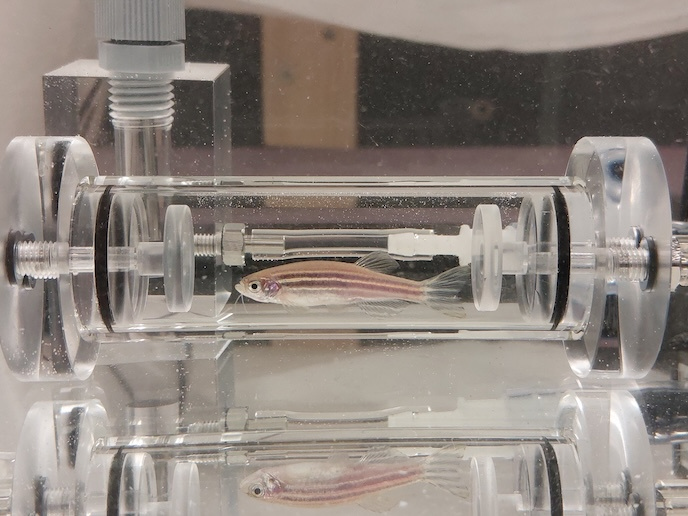
Using zebra fish as a model species, the project investigated how rising temperatures and declining oxygen levels impact fish metabolism and how metabolic changes shape upper thermal limits and behavioural responses to hypoxia. To achieve this, the team built and refined specialised experimental systems that allow them to precisely control water oxygen and temperature while also measuring metabolic traits, thermal tolerance limits and behaviour. One of those systems is the OptoReg oxygen-regulation system, a simple and inexpensive device that converts the widely used FireSting-O2 oxygen meters from PyroScience into precise closed-loop oxygen regulators. Published as an open access methods paper, the system enables resource-limited laboratories to conduct sophisticated hypoxia experiments.
New discoveries challenge old assumptions
With these tools in hand, researchers found that the water oxygen threshold at which upper thermal limits (critical thermal maximum (CTmax)) become constrained (PCTmax) is not a fixed species property – it shifts substantially depending on how quickly temperatures rise. Researchers also found that behavioural avoidance responses to aquatic hypoxia are more strongly linked to hypoxia tolerance capacity than to baseline oxygen demand. This finding supports the idea that avoidance behaviour is mechanistically driven by proximity to physiological limits rather than by routine metabolic costs, which has implications for predicting how individual variation in physiology translates into behavioural responses under declining oxygen conditions. Last but not least, the project discovered that the effect an increasing warming rate has on CTmax reverses across acclimation temperatures – increasing CTmax in warm-acclimated fish but decreasing it in cold-acclimated fish. “This challenges the widespread assumption that a single standardised warming protocol can reliably measure and compare thermal tolerance across species from different thermal environments,” remarks Ern. Taken together, these findings reveal that standard laboratory methods for measuring upper thermal limits can systematically over- or underestimate species’ sensitivity to combined warming and low oxygen – with direct implications for the reliability of projections used to predict how fish populations will shift under climate change. The project’s key findings have been presented at international conferences, and several manuscripts are currently in preparation for submission to leading scientific journals. In the meantime, the project has already contributed to several published works, including a widely cited 2023 review article in ‘Physiology’ that synthesises current understanding of how cardiovascular function, oxygen supply and cellular stress responses interact to set thermal limits in fish. OxyTempFish received support from the Marie Skłodowska-Curie Actions(opens in new window) programme.