Advancing hybrid storage for Europe’s clean energy transition


Originating from Joint Programme Energy Storage(opens in new window) within the European Energy Research Alliance, StoRIES(opens in new window) brought together 17 partners to increase access to 64 research infrastructures across Europe, ranging from laboratories to digital modelling platforms. Thanks to its Transnational Access programme(opens in new window), scientists and engineers working on hybrid energy storage systems used specialised facilities that would otherwise have been unavailable in their own institutions. “We put together the different communities, and tried to look for hybrid storage solutions to solve application problems, not just to focus on individual technologies,” explains project coordinator Stefano Passerini, from the Karlsruhe Institute of Technology(opens in new window) (KIT) in Germany. Researchers received more than 350 weeks of access to these facilities, and used the time to test materials, build and trial combined storage systems, and evaluate performance in real-world conditions. The project also brought scientists, system engineers and modellers together to work more closely than would usually be possible.
Bringing storage technologies together
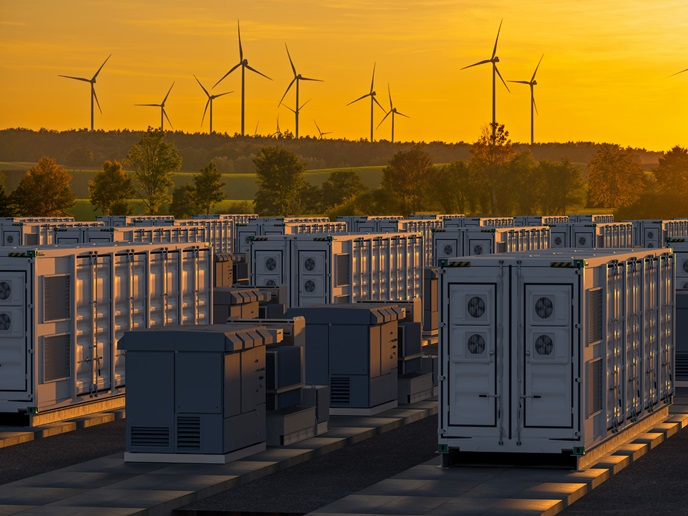
Rather than focusing on storage technologies in isolation, StoRIES investigated how different systems could work together for different energy uses, including grid stabilisation, off-grid systems, renewable energy communities, heavy-duty transport and industrial decarbonisation. Storage technologies can vary dramatically in terms of power density, energy capacity, lifetime and cost. Batteries can respond quickly to fluctuations in supply and demand, thermal storage supports industrial heat applications, while hydrogen and other chemical carriers can provide longer-duration storage. Combining these and other technologies within a single system allows storage to respond quickly to changes in supply while also supporting longer-duration energy needs. The project produced the first European Technology Roadmap(opens in new window) and Strategic Research and Innovation Agenda(opens in new window) (SRIA) dedicated to hybrid energy storage. These documents identify priority research areas and innovation gaps across electrochemical, chemical, thermal, electrical and mechanical storage systems, and will inform future research and infrastructure investment.
Building skills and shared research
StoRIES also worked to develop the next generation of energy storage researchers. A network involving 46 early-stage researchers designed hybrid storage solutions for real-world case studies, and more than 100 students took part in three summer schools(opens in new window) held in Nicosia, Rome and Trondheim. Mentoring programmes and online seminars supported interdisciplinary learning throughout the project. “Hybrid energy storage requires expertise from different fields, so it was crucial to bring researchers together across disciplines,” says KIT’s Myriam E. Gil Bardají, deputy project coordinator. The project also published in two open access books presenting case studies and analyses of storage technologies: ‘Emerging Battery Technologies to Boost the Clean Energy Transition’(opens in new window), which has recorded more than 197 000 downloads, and ‘Hybrid Energy Storage: Case Studies for the Energy Transition’(opens in new window), published early 2026. StoRIES connected more than 250 research and industry stakeholders working on hybrid energy storage, and helped build a community of practice focused on combining storage technologies. It also produced two white papers on open data and sustainability in hybrid storage systems. The project leaves behind its technology roadmap and insight into how different storage technologies can work together in practice. It also created a community that continues to inform energy storage research and development across Europe. Last but not least, the RISEnergy project (also coordinated by KIT) has picked up where StoRIES left off, providing coordinated access to research infrastructures across a wider range of renewable energy technologies.