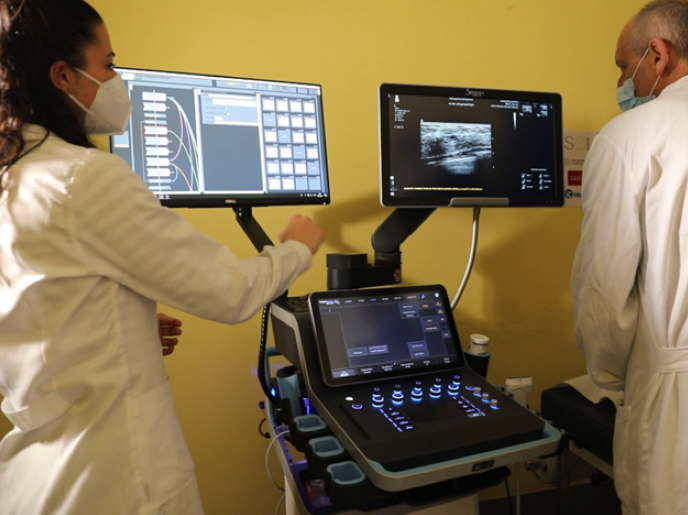
Applying AI-assisted heart analysis in clinical settings


Cardiovascular diseases remain the leading cause of death globally, and echocardiography – or heart ultrasound – is one of the most widely used and cost-effective, non-invasive tools for diagnosing heart conditions. Despite its importance however, access to high-quality echocardiography remains limited by several major challenges. “Traditional heart ultrasound analysis is highly dependent on specialist expertise and involves a large amount of manual work,” explains project coordinator Neringa Valantinė from Ligence(opens in new window) in Lithuania. “Cardiologists often spend the majority of examination time performing repetitive measurements and preparing reports.” Valantinė notes that the process is also prone to variability and human error. Healthcare systems across Europe also face growing pressure from ageing populations, increasing cardiovascular disease rates and shortages of trained medical professionals.
AI, software engineering and cardiology
The AI-driven cardiac ultrasound analysis(opens in new window) project, which was funded by the European Innovation Council(opens in new window) and coordinated by Ligence, sought to address these bottlenecks by improving the speed, consistency, accessibility and quality of heart ultrasound analysis. This involved developing and refining advanced neural network models capable of analysing complex ultrasound image data. Significant effort also went into improving the usability, speed, interoperability and reliability of the software platform so it could function effectively in clinical environments. “To achieve our aims, we combined expertise from artificial intelligence, software engineering, cardiology, clinical practice and regulatory affairs,” says Valantinė. “We worked closely with clinicians and healthcare institutions to ensure that the technology addressed real clinical needs.”
Clinical evaluation using echocardiography data
Innovations were assessed through continuous AI performance validation, as well as clinical evaluation using real-world echocardiography data and ongoing feedback from clinicians. “A key project objective was to build a diverse and representative dataset that would support robust AI performance across different patient populations, clinical environments and ultrasound imaging practices,” remarks Valantinė. The platform’s automated measurements and reporting capabilities were also assessed against standard clinical practice; and compared with evaluations performed by experienced clinicians. This helped to ensure clinically reliable and consistent results. “We focused in parallel on the usability of the technology in clinical workflows, as well as regulatory issues to support safe deployment in healthcare environments,” adds Valantinė. “Achieving regulatory compliance in different markets was an important part of the project and a key step towards broader clinical adoption of the technology.”
Broader clinical adoption and continued expansion
One of the key lessons from the project, believes Valantinė, has been that successful AI solutions in healthcare must be designed around clinical realities. “Accuracy alone is not enough – systems also need to integrate smoothly into hospital workflows, save clinicians time and build trust among users,” she says. “Another important achievement was obtaining regulatory certification, demonstrating that advanced AI tools can meet stringent medical device requirements.” Next steps include working towards broader clinical adoption and continued expansion of the platform’s capabilities. Ligence is also working on scaling deployment across hospitals and healthcare systems internationally, while continuing collaborations with clinicians to refine the technology based on real-world use. “The long-term vision is to make high-quality cardiac ultrasound analysis more accessible, efficient and consistent for patients and healthcare professionals alike,” notes Valantinė. “By automating repetitive tasks and supporting clinicians with AI-driven analysis, technologies such as Ligence Heart(opens in new window) have the potential to reduce waiting times, improve diagnostic quality and enable earlier detection of cardiovascular disease. This could ultimately lead to better patient outcomes and more sustainable healthcare systems.” “The added value of N-Spire lies in its innovative approach to microorganism cultivation, transforming agricultural residues into high-value microbial products through a manufacturing platform,” concludes Miles. “By combining continuous pre-thermal treatment and solid-state fermentation, the project demonstrated a more circular, lower-cost and potentially lower-carbon alternative to conventional fertiliser and microbial production systems.”