Using data to design a more robust offshore wind turbine


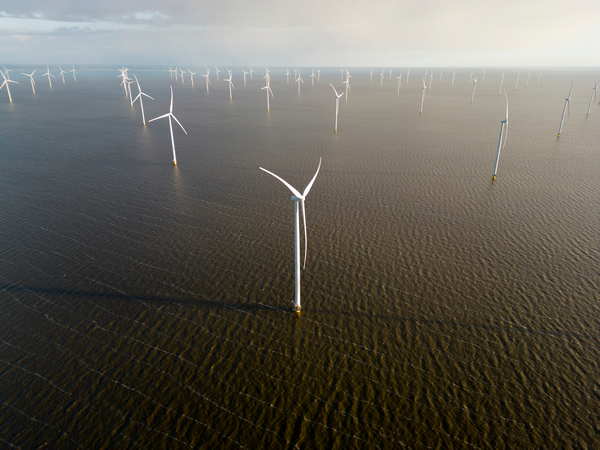
Home to five sea basins, Europe’s offshore wind power(opens in new window) potential is simply massive. But leveraging this potential requires that wind turbines be able to withstand the harsh conditions of the offshore environment. “Subjected to intense wind, waves and currents, the average service life of a monopole wind turbine can be as little as 20 years – and getting to that point requires a significant amount of maintenance,” explains Felix Nieto, a professor of Civil Engineering at the University of A Coruña(opens in new window). Not only is this maintenance expensive and dangerous, an out-of-commission turbine means less energy is being produced, which can impact an energy company’s bottom line. Thus, it should come as no surprise that there is a growing demand for a longer-lasting, lower maintenance turbine. According to Nieto, the first step to building a better turbine is understanding the environmental loading conditions they must withstand. “If we understand the structural loads that monopile wind turbines have to resist over their lifetime, we can design them more efficiently while guaranteeing that they can safely operate under extremely harsh conditions,” he says. This is where the EU-funded FUNnY-SUMO project comes in. Supported by the Marie Skłodowska-Curie Actions(opens in new window) (MSCA) programme and coordinated by the University of A Coruña, the project developed a computational fluid dynamics (CFD) model to simultaneously simulate the impact wind, waves and currents have on an offshore turbine.
Data-driven solutions to complex structural design problems
What makes this project’s use of CFD modelling so unique is that the collected data was then used to train machine learning algorithms. This allowed the algorithms to assess the environmental loads of offshore monopiles and to take this information into account when proposing new wind turbine designs. For example, having confirmed that the computational model provides results similar to equivalent lab experiments, researchers used the CFD model to generate a surrogate model. This surrogate model was subsequently used to provide – with minimum computational effort – the structural loads acting on the monopile wind turbine for a wide range of wind, wave and current conditions. “Not only does our model represent a step forward in the use of data-based techniques in complex structural design problems, it contributes to the safer design of critical energy infrastructure that is exposed to very demanding – but to some extent uncertain – environmental loads,” notes Nieto.
Towards a better wind turbine
While the project’s model opens the door to designing better wind turbines, it is just the first step. “Our model can be further improved by including additional environmental loads, or by extending it to address other wind energy structures like floating wind turbines or jacket foundations,” concludes Nieto. The model could also be expanded to consider the structural dynamics of monopile wind turbines. The research team is currently looking to work with industry partners to facilitate the incorporation of data-based design approaches into their day-to-day practice. The bulk of the project’s research was conducted by Ali Kareem Hilo al Behadili, an MSCA postdoctoral fellow(opens in new window) who worked with researchers and experts from the University of Zagreb(opens in new window), Spain’s IH Cantabria(opens in new window), and Chungnam National University(opens in new window) in South Korea.