Exploring the factors that influence infant feeding in culturally different countries

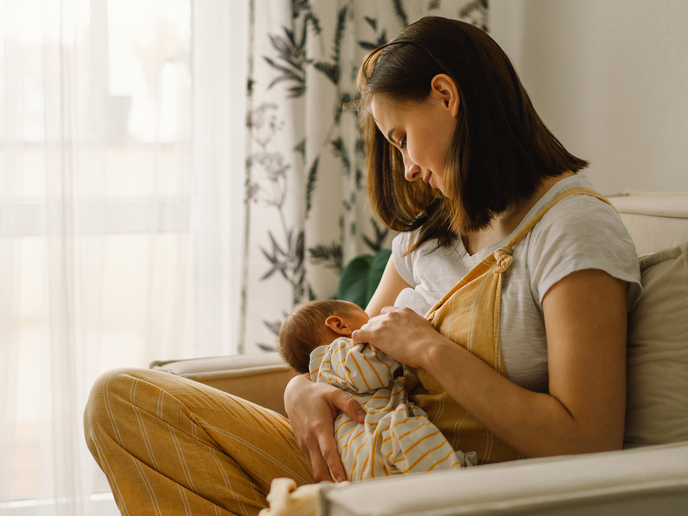
Infant feeding is a personal matter, yet one which shows significant variation between cultures. In Finland, almost all mothers initiate breastfeeding, while in Ireland the initiation rate is just over 60 %. Mothers in these countries face similar challenges, including financial and support constraints and the sexualisation of breasts. This suggests that infant feeding is less a decision than the outcome of complex, intersecting factors. “If breastfeeding were purely an individual choice, there would be no reason why ‘choices’ would be distributed so differently across countries, regions and socio-economic groups,” explains Jenny Säilävaara(opens in new window), a researcher now at the University of Jyväskylä(opens in new window) (JYU) Finland. “These systematic differences tell us that there are structural factors that an individual mother cannot influence on her own.” This was the starting point for Säilävaara’s Marie Skłodowska-Curie Actions(opens in new window) funded project INFEDE, based at Maynooth University in Ireland(opens in new window). “I wanted to shift the focus from the individual to structures and look at which factors explain the differences between countries,” she says.
From professionals to mothers: two sources of insight
The groundwork for the project was a survey sent to people working in breastfeeding support, both professionals and volunteers, in Ireland and Finland. The results gave Säilävaara insights into how those working with mothers see the situation, for example how they experience the continuous budget cuts affecting organisations. Säilävaara then used narrative interviews to hear infant feeding stories from mothers of different backgrounds. The interviews involved mothers living in Ireland and Finland, Roma mothers in Ireland and Finland and Finnish mothers who had given birth in Ireland.
Exploring the lived experience of mothers across cultures
Säilävaara wanted to understand the mothers’ lived experience: how mothers in Ireland and Finland talk about infant feeding, how they make sense of their own experiences, and what kind of support they received, or did not receive. “What emerged from these stories was that the differences between the countries cannot be reduced to individual mothers’ attitudes or motivation,” notes Säilävaara. In Finland, breastfeeding is more culturally expected, whereas in Ireland formula feeding tends to be more common – shaped in no small part by the significant influence of formula companies and the way their products are promoted from the very start, including in hospital settings. Interviews in both countries showed how strongly the idea of motherhood is tied to social norms, and revealed the pressure to meet certain expectations. Those who did not breastfeed, for whatever reason, felt significant pressure to justify that choice – and this was true in Ireland too, where formula use is more accepted. “What perhaps struck me most was how many mothers described feeling very alone,” adds Säilävaara.
Ties between motherhood and social norms
Säilävaara’s message for wider audiences and policymakers: breastfeeding is not simply an individual choice that can be supported through campaigns or guidance. “Promoting breastfeeding cannot be a matter of public health communication alone and it requires more thoughtful nuanced interventions,” remarks Säilävaara. She hopes the research will spark discussion at the EU level about how to measure and monitor feeding practices, and to understand that change requires structural solutions. “I hope to further analyse infant feeding stories and the experiences of mothers and breastfeeding people,” Säilävaara says. “There is still so much to learn from listening to them.”