Material-producing bacteria

Since their discovery by three Nobel Prize-winning chemists last year, metal-organic frameworks (MOFs) have been the hot topic in materials science. MOFs are highly ordered materials that are built in a Lego-brick type fashion. With metal ions acting as the joints and organic molecules as the linkers, these materials can build an endlessly repeating structure. “MOFs open the door to designing new, custom-made materials capable of capturing carbon dioxide, catalysing chemical reactions and conducting electricity,” says Filip Meysman, a professor and biologist from the University of Antwerp(opens in new window). While this certainly represents an important new capability for humans, it turns out we’re a little late to the party. Bacteria have been producing MOFs for the last 600 million years. “Somehow evolution came up with the exact same idea as the Nobel Prize chemists,” adds Meysman. Through the PRINGLE(opens in new window) project, which was funded by the European Innovation Council(opens in new window), Meysman is leading an effort to better understand these MOF-producing bacteria.
It’s a cable, it’s an electric wire, it’s bacteria
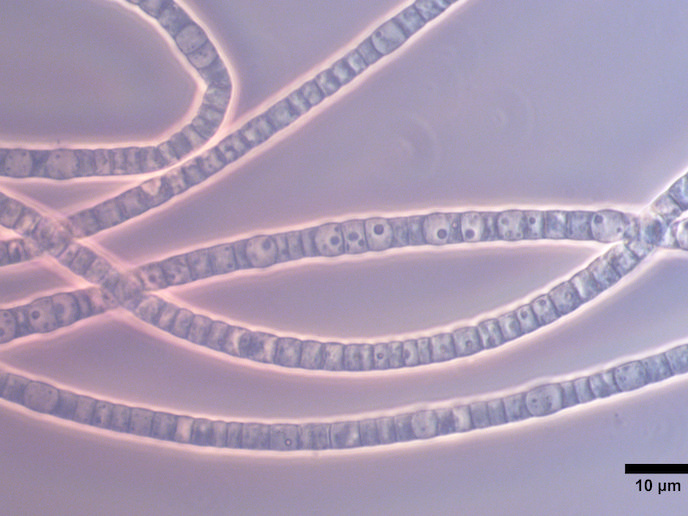
A special type of microbes that thrive in the muddy sediments of rivers, lakes and oceans, the MOF-producing ‘cable bacteria’ have a unique ability to generate and conduct electricity. “About 15 years ago, scientists noted that electric currents were running in the seafloor,” explains Meysman. “It turned out that these currents were conducted inside centimetre-long bacteria.” According to Meysman, cable bacteria act as living wires, transporting electrons over centimetre-scale distances. “The cable bacteria essentially have a power line network embedded in their cell envelope with thin conductive fibres running in parallel along the outside of the centimetre-long filaments.” While scientists know that this unique capability helps the bacteria survive in the oxygen-deficient sediments they inhabit, how they conduct electric currents remains a mystery.
From bacteria to metal-organic frameworks
To help answer this question, the PRINGLE project used a suite of detailed microscopy and spectroscopy techniques. One of the first things they discovered was that the bacteria’s conductive fibres looked very much like the power cables used to charge a smartphone – only 20 000 times smaller. “Just like the braided copper wires in a power cord, there is a bundle of intertwined nanoribbons in the centre of each fibre, surrounded by a protective protein layer,” notes Meysman. As Meysman explains, this nanoribbon architecture has never been seen before and acts as a miniaturised yet very efficient highway for electron transport. “An even bigger surprise was that the nanoribbons themselves consisted of a MOF material,” he says. “Up until now, it was not known that biology could produce such a material.”
Cable bacteria as excellent chemists
What the project’s research ultimately shows is that cable bacteria are excellent chemists. “Nanoribbon MOF material coming from cable bacteria is among the best conductive MOF materials ever produced,” remarks Meysman. This discovery not only lays the groundwork for the bio-based synthesis of MOFs, it also suggests a novel design principle for sustainable electronic materials. As to the latter, PRINGLE researchers are now investigating whether chemists can design bio-inspired MOF materials and how such materials could serve new electronic or battery technologies. “Who knows, maybe someday you’ll find such a material inside your smartphone,” concludes Meysman. The project has published its research in ‘Nature Communications’(opens in new window).