



Integrating virtual energy storage systems into smart grids

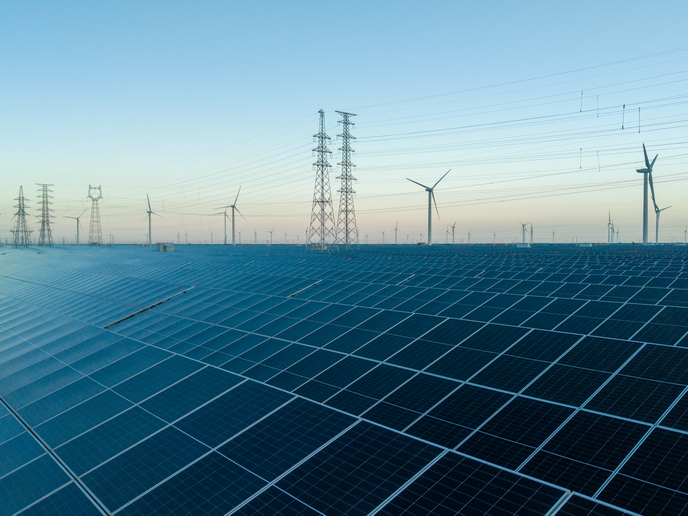
Renewable energies hold great potential in lowering greenhouse gas emissions and helping to tackle the impacts of climate change. However, as power output from these sources is inherently variable, the grid needs to be flexible. “Solar and wind produce power when the weather allows, not when people need it,” explains Seifeddine Ben Elghali from Aix-Marseille University(opens in new window) in France, and FlexCHESS(opens in new window) project coordinator. “As their share grows, grid operators need more flexibility so people can consume less, consume later or store energy at the right moment.” Many assets that could provide this flexibility already exist, such as batteries, heat pumps, air conditioning and electric vehicle (EV) chargers. However, these are currently small, scattered, made by different manufacturers and do not talk to each other, so the grid cannot see them. Through the EU-funded FlexCHESS project, researchers led by Ben Elghali set out to connect these assets and make them act together, as a single ‘virtual’ energy storage system. FlexCHESS sought to provide new services that make better use of existing assets and improve the flexibility and resilience of smart grids.
Building flexibility into European smart grids
Three tools were at the heart of the project, all of them tested on real pilot sites. The first was the FlexCHESS platform, developed and operated by Aix-Marseille University. This cloud-based platform connects assets on several sites and runs the whole chain automatically: it collects data, forecasts production and consumption, optimises how each asset is used, places bids on the market and settles the results. “It was designed to handle different countries and market rules within a single platform,” notes Ben Elghali. The second is a smart EV charging tool developed by French company RDIUP(opens in new window). Based on their proprietary app, this tool was trialled in a pilot in Slovenia, in collaboration with the distribution system operator Elektro Ljubljana(opens in new window). “When the grid is congested, drivers who are charging are asked to accept a lower charging power, and drivers with a booking are asked to shift their session to another time or another station,” adds Ben Elghali. The third tool is a digital twin developed by Toshiba(opens in new window). This virtual replica of each asset shows what the asset can offer and lets operators test strategies before applying them in the real world.
Demonstrations in real-world environments across Europe
The solutions were demonstrated in five pilots: live sites in Italy, Slovenia, Spain and Türkiye, and an industrial case study in the United Kingdom. “We showed that very different assets can be grouped and behave like a single storage system,” says Ben Elghali. The Italian pilot showed a reduction in peak load of around 20 % on a real day. Using two years of data from the same site, the Toshiba digital twin showed that coordinating EV chargers, batteries and air conditioning improves cost-effectiveness and peak reduction by more than 20 %, while reducing the impact on EV charging sessions by up to 40 %. In Slovenia, integration with the European roaming network GIREVE(opens in new window) opened the pilot’s charging stations to drivers across Europe.
Moving towards integration in European electricity grids
The team expects virtual storage to enter the grid first through energy communities, aggregators and commercial buildings, and to grow as flexibility markets open across Europe. “The technology is ready. What remains is mostly regulatory and economic,” says Ben Elghali.