



Holistic digital ecosystems for more sustainable mining

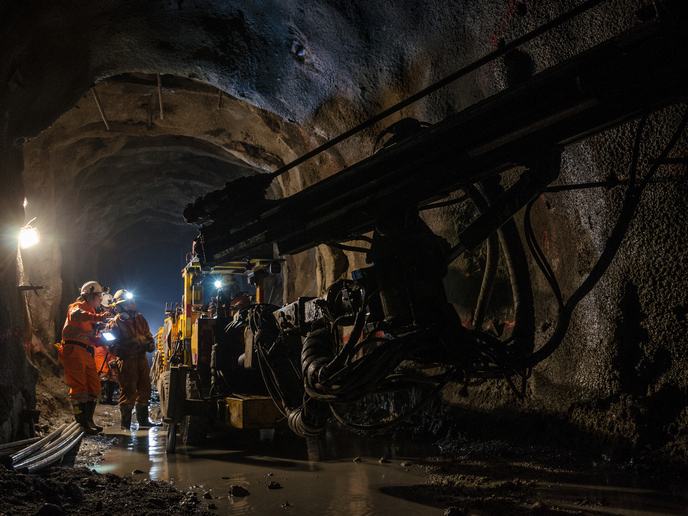
Digital technologies, robotisation and automation have allowed sectors, from manufacturing and supply chain logistics to healthcare and retail, to achieve numerous efficiencies. They can, for example, support well-informed decision-making that strengthens product performance, process efficiency and human safety. Some sectors however have not fully benefited from such innovation. Mining for example remains one of the least digitised industries. “Mines are demanding environments,” explains Andrea Ferretto Parodi, head of innovation at GFT Technologies(opens in new window) (website in Italian) Italy, coordinating partner of Mine.io(opens in new window). “Conditions are harsh and constantly changing, data comes from heterogeneous equipment and systems, and underground connectivity is limited. Many stakeholders must also be able to trust shared data and decisions, and operators need evidence on real sites that new technology is reliable before adopting it.”
Digital ecosystem along the raw materials value chain
The EU-funded Mine.io project set out to address this by building a holistic digital ecosystem across the raw materials value chain, from exploration and extraction to processing and waste management. The project pulled together 25 partners from 11 countries, with expertise across digital, robotic and sustainable technologies. The team began by working on the broad architecture of the digital mine. Muon telescopes – detectors that track high-energy unstable subatomic particles – and X-ray drill core analysis, used to non-destructively inspect the chemical and internal structure of rock, were applied. Autonomous electrified vehicles with wireless charging were also introduced to help achieve energy savings. The next step was to validate the technologies, from sensor-based digital twins to artificial intelligence (AI), blockchain and robotics, across eight pilot sites in six EU countries. These included gold mines, processing plants and open-pit sites. “The aim was to validate this integrated set of technologies in real operating environments, with targets on productivity, energy use, emissions and costs,” adds Ernesto Troiano, the Mine.io project coordinator.
Validated technologies and results
The validated technologies included digital twins in a smelting plant in Germany. The project also helped to advance the market readiness of several cutting-edge technologies. “These include AI-assisted flotation monitoring in Poland and blockchain traceability in Greece and Finland,” says Troiano. “We also successfully conducted underwater muon imaging with an autonomous vehicle, which was tested in a flooded mine in Portugal.” In addition, a number of workshop presentations were carried out, and over 30 open access peer-reviewed papers were published. A simple technical overview of the architecture and value chain has also been made publicly available.
Reducing energy use and carbon footprints
Post-project, next steps include encouraging the uptake, replication and exploitation of this cutting-edge technology. “The groundwork has been laid,” notes Troiano. “Replication and upscaling strategies are already in place, and key exploitable results have been mapped for IP management. We have also developed a commercialisation plan to help bring these innovations to market.” In doing so, the Mine.io project believes it will advance the EU’s European Green Deal and digital agenda(opens in new window), by helping to reduce energy use and carbon footprints within the mining sector. This will be achieved notably through electrified underground equipment, better tailings management (handling mine waste) and more accurate life-cycle assessments. “Mine.io should also support a secure domestic supply of critical raw materials and circular business models that turn waste into value,” adds Ferretto Parodi. “We believe our results will also inform future safety and environmental standards and serve as a replicable model across the sector.”