Seaweed the key to unlocking a more sustainable future

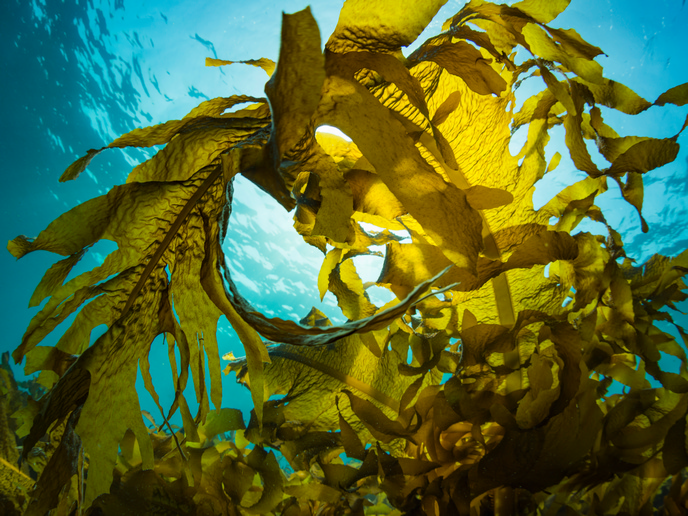
In a world facing climate change, food security challenges and biodiversity loss, seaweed is increasingly recognised as part of the solution to a more sustainable future. That’s because seaweed can serve as a renewable feedstock for a wide range of industries. When cultivated in the ocean, seaweeds absorb carbon dioxide, while seaweed farms can create complex underwater habitats that support marine biodiversity. Yet despite these benefits, European seaweed cultivation remains limited. “By developing offshore cultivation technologies and automated handling systems, we can make better use of available ocean space and establish a competitive seaweed industry in European waters,” says Ólavur Gregersen, CEO and co-founder of Ocean Rainforest(opens in new window). This is where the EU-funded SeaMark(opens in new window) project comes in. “SeaMark aimed to unlock the potential of cultivated seaweed for a thriving European blue bioeconomy by improving open ocean and land-based cultivation, selective breeding, biorefinery processing, innovative product development, and market uptake,” adds Gregersen, who coordinated the project.
New ways to sustainably cultivate seaweed
The project developed and demonstrated various technologies covering the entire seaweed value chain, including for the large-scale offshore cultivation of various kelp species. “Selective breeding programmes delivered improved growth performance and enabled faster screening of promising strains,” explains Gregersen. Significant progress was also achieved in the seeding stage, where continuous cultivation lines and automated seeding technologies increased efficiency by up to tenfold compared with conventional approaches. Further downstream, project partners developed more resource-efficient extraction methods. Novel single-step extraction and cascading biorefinery approaches reduced water and chemical consumption while increasing the utilisation of biomass. The resulting bioactive ingredients, including fucoidans and seaweed-derived oligosaccharides, were subsequently evaluated for their bioactivity. Researchers also demonstrated integrated, land-based multi-trophic aquaculture systems (IMTAs). IMTAs combine fed species such as fish with extractive species – in this case green and red seaweeds – from different trophic levels into a single, closed-loop production system.
A portfolio of seaweed-based products
On the other end of the value chain, the project developed solutions for converting cultivated seaweed into feedstock. This line of work included demonstrating multiple-product biorefinery and co-extraction approaches, as well as lactic acid fermentation processes. These processes were then used to produce 12 innovative products(opens in new window) now ready for investment, large-scale production and commercialisation. Examples include seaweed-based fibres and proteins for food and a pig feed additive, as well as a green alginate that can be used to produce foods, biofilms, textiles and gels. “We can now state that the full value chain is technically ready for commercialisation – from seeding, cultivation and harvesting to processing and producing sustainable end products,” notes Gregersen.
Time to scale up seaweed production
But technological innovation alone isn’t enough. To truly unlock seaweed’s sustainable superpowers, the sector needs to scale up. However, without the right support systems – market uptake, legislation, investment frameworks, procurement mechanisms – doing so is easier said than done. “The challenge is no longer proving that seaweed works,” concludes Gregersen. “It’s ensuring that the enabling environment adapts so these sustainable products can serve as a viable alternative to what’s currently on the market.” Building on the project’s results, the SeaMark consortium is now focused on accelerating the commercial deployment of seaweed-based products and expanding into new markets.