Reusing textile effluents in dyeing processes

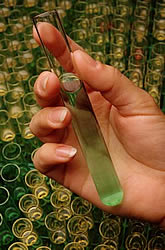
The contemporary textile industry involves extremely high water-demanding processes. A kilogram of textile material requires 100 litres of water. Moreover, there is also a significant shortage of water resources, mostly found in the south of Europe. Hence, many industrial processes, in particular that of textiles, are now more than ever searching for new water-saving technologies. Covering this need, an EC funded project developed a new process for on-site textile effluent treatment after textile bleaching. The new processes utilises an innovative enzyme technology that involves immobilised catalase enzymes for the degradation of hydrogen peroxide, a bleaching effluent. This substance is highly responsible for the increased salt concentration in the process water that inhibits its reuse. The enzymes are more environmentally friendly than any other chemicals, which are alternatively used for the same purpose. Simultaneously, the new immobilised catalases are recyclable, since they are resistant to both high-temperature and high-pH conditions, that are usually encountered during textile processing. Having undergone industrial trials the method showed very promising results for the treatment of effluents resulting from continuous bleaching / washing machines. Furthermore, the process has the potential also to be used in other processing steps such as dyeing. The combination of both aspects - water treatment after textile bleaching and recycling of the same bath for further dyeing - is expected to contribute substantially to the water saving efforts of the textile industry.