Building better fuel cells

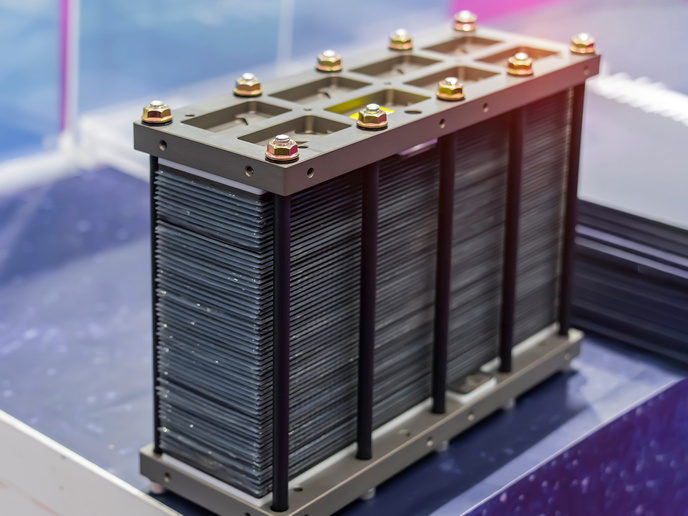
Fuel cells are very efficient, as they convert chemical energy from hydrogen and oxygen into electricity by producing water and discharging heat. The cells can be arranged in series and parallel circuits in a design known as a fuel cell stack in order to increase their efficiency. European scientists recently joined forces to develop a highly efficient Polymer Electrolyte Fuel Cell (PEFC) stack. The 'Interaction between the gas diffusionlayer and the gas flow channel of polymer electrolyte fuel cell (IGDL/GFC) project investigated fuel cells and hydrogen technologies to develop integrated systems for hydrogen and energy production. The EU-funded project designed and built a high-efficiency stack for use in the power train of a fuel cell-powered prototype car. The vehicle will be entered into the Shell Eco marathon, an annual race in which cars aim to achieve the greatest possible fuel efficiency. PEFCs are best for low-power applications and transportation, but further research is required to improve durability and operational stability. Researchers focused on the transport of water inside the PEFC, which can become flooded if the water is not correctly removed. However, the right amount of humidity inside the cell is crucial for hydrating the polymer electrolyte. Two components of the fuel cell and the way they interact with one another are crucial to water management in the device. The Gas Diffusion Layer (GDL) supports the electrode and the Gas Flow Channel (GFC), which ensures the distribution of gas over the electrodes active area. A model cell was created by project partners to investigate the flow of water in the GDL and GFC under carefully controlled thermal and flow conditions. The results were used to conduct a deeper analysis of the large number of ways a real fuel cell can become flooded. The findings from the IGDL/GFC project have the potential to contribute new designs and help determine operating conditions for minimising energy consumption. The project enabled researchers to gain valuable experience in fuel cell electrochemistry and stack design, as well as contribute to European competitiveness in the development of clean forms of energy.