Improved tissue engineering on the horizon

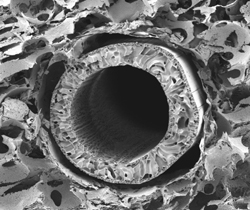
Tissue engineering requires a combination of cells, engineering technology and materials with biochemical factors to replace or improve biological elements such as bone, cartilage, vessels or skin. Regenerative medicine can benefit from advances in tissue engineering, although several challenges must still be overcome. The connection between engineered tissues and the body's vascular system hasn't been perfected, which leads to eventual tissue death. The EU-funded project 'Bioreactive composite scaffold design for improved vascular connexion of tissue-engineered products' (VascuPlug) aimed at developing a novel three-dimensional (3D) scaffold structure to overcome this issue. In medical terms, it considered the use of polymers and growth factors to open micro-channels for vessel in-growth into cell-seeded polymeric scaffolds. It also aimed to use monocytes (white blood cells) to promote the growth of blood vessels. The project successfully developed and optimised scaffold materials from biodegradable polymers required to produce the desired effect. It improved knowledge on the subject and surpassed the state of the art in this field through various experiments. A bioreactor suitable for controlled long-term in vitro culture was also produced, while three specific peptides to promote angiogenesis were synthesised. Lastly, three drug delivery devices to deliver growth factors and small molecules were designed. These advances can supplement standard drug-based therapies and provide major medical benefits. In short, the project's results havew the potential to improve the success for tissue implantation engineered outside the body, promote healing, increase life expectancy and save on healthcare costs.