



Enhancing research centres for greater EU good

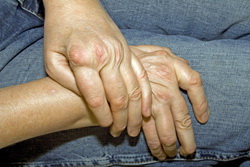
The 'Strengthening of ''Carol Davila University of Medicine - Research centre on the pathology and treatment of the systemic rheumatic diseases'' for a successful contribution to ERA' (ARMS) project aimed to enhance the quality of the Carol Davila University of Medicine & Pharmacy - Research Centre on the Pathology and Treatment of Systemic Rheumatic Diseases (RCRD) research centre so it could take the lead in Romanian medical research and perform as a reliable partner for EU research groups. The project envisioned a research centre better prepared for taking part in the Sixth Framework Programme (FP6) and attracting new entry or experienced scientists from Romania and beyond. The Advanced Romanian Mobilisation Scheme (ARMS) was initiated when Romania was still an EU candidate country. ARMS covered a number of areas in order to realise its overall goal. These included networking with other research centres outside of Romania, improving on the quality of the RCRD team, and upgrading the centre's science and technology (S&T) equipment. Another objective was to attract high-level researchers - which it accomplished with the addition of two such scholars. Research activities were conceptualised with a view to gaining the most from new high-tech devices and/or related components. These included an atomic force microscope, a dual-energy X-ray absorptiometry (DEXA) scan, freezers and computers. Special efforts were made to share newly gained knowledge as well as high-tech acquisitions with similar Romanian outfits. Various activities were aimed at promoting a higher representation of women in the upper levels of research, with all new scientists hired being women. Altogether, 10 of 12 national research projects developed by the team were coordinated by RCRD women scientists. Special courses and gatherings offered a base from which to present work performed and results achieved as well as introduce research facilities to incoming young scientists.