Enhancing the in-flight experience

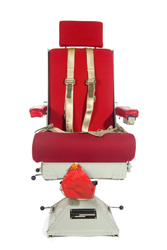
The 'Smart technologies for stress free air travel' (SEAT) project developed a prototype smart seat that takes concern for passenger comfort to a whole new level. The project team, fully cognisant of the fact that there is no universal setting for optimal comfort levels while in flight, took a radical new approach to improving the microenvironment of passengers. This meant creating a system that attends to individual requirements and preferences rather than being centrally controlled or in need of manual adjustments. Smart seat development included a physiological model for assessing passenger comfort, and environmental as well as physiological parameters. Measuring systems, either on the seat and accessories or passenger-worn, were tailored for monitoring, among others, temperature, pressure and humidity, breath frequency and health. The wearable devices were especially developed to allow for counteracting psychological stress. A conceptual model for regulating the temperature and humidity of each passenger's microclimate was also developed. The smart seat is also an essential component of on-board entertainment, with the integrated approach allowing a choice of in-travel flexible home or office environments. Generally speaking, SEAT's major innovation is the development of a novel customer-centred cabin environment that offers an enhanced overall personal travelling experience. Further research is needed before the SEAT approach can be effectively incorporated into the aircraft cabin; however, the trip is under way.