Interfacial engineering, or understanding boundaries

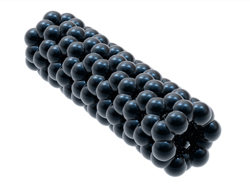
Composite materials, those composed of two or more materials, build on the strengths of the individual components. The ‘Interfacial engineering in copper carbon nanofibre composites (Cu-C MMCs) for high thermally loaded applications’ (Interface) project was designed to fabricate a carbon nanofibre-reinforced copper composite with high thermal conductivity and minimal expansion in response to heat (low coefficient of thermal expansion (CTE)), given that such expansion can lead to cracks and crack propagation of structures. Along the way, investigators sought to address critical issues related to conductance at the interface of the composite's two components. The team developed novel techniques to measure interfacial thermal contact resistance (TCR), which they employed for both glassy carbon substrates and diamond substrates. Given the lower than expected thermal conductivities of the copper carbon nanofibre composites, the team carried out a thorough investigation. Although poor interfacial thermal conductance did play a role, the more important cause was that the carbon fibres lost their graphite structure during processing. Both transmission electron microscopy and a novel technique based on Raman spectroscopy were used to characterise this effect. The latter enabled study of many important parameters much more rapidly than previously possible. In summary, the Interface project enabled detailed investigation of interfacial thermal conductance in copper carbon nanofibre composites, elucidating the cause of relatively low conductivities observed and providing tools for interfacial engineering research related to future metal-carbon composite structures.