



Dirt for fun and learning

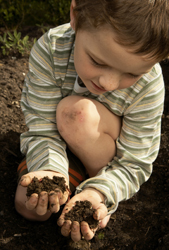
The EU-funded 'Exploring the ground - fostering scientific understanding in primary schools' (Efsups) project worked to enhance vocational training for early age educators and child minders at primary schools as a means of promoting the scientific understanding of children aged between 5 and 8. Basing its approach on education for sustainable development (ESD), the project focused on soil issues with the aim of developing a curriculum and simple experiments for children to experience nature. Partners established a discussion group at the project’s start and developed a website for the dissemination of new teaching materials and tools, to support teachers and educators’ activities, and to facilitate exchanges of related teaching experiences and communication among project partners, teachers and educators. Project results and materials for downloading are available at http://www.teaching-soil.eu(opens in new window) and http://www.exploring-the-ground.eu(opens in new window) online. An Efsups evaluation report looked at the experiences of teachers and pupils participating in advanced training events and seminars. It also aimed to analyse the effects of the curriculum and discover how the goals of the teaching material were realised. The evaluation’s predefined key themes explored, among others, gender balance, experimental learning, scientific understanding, and ESD and manageability of the curriculum. Feedback from the various countries taking part in the project was used to make suggestions on how to improve the materials offered. For example, it became evident that the curriculum and approach had to consider the professional status of early childhood educators and primary school teachers who are most likely not trained for science teaching, and may lack sufficient knowledge of soil issues. The curriculum was found to be feasible from a technical point of view, given that most equipment needed is found in everyday surroundings (home and school) or can even be made from everyday waste. The materials are also easy to buy, which makes the programme accessible to schools that have little financial support. However, difficulties were highlighted with regard to Internet access and the broad availability of online materials. Children offered positive feedback and showed enthusiasm for the experiences afforded them through the teaching material. Thus Efsups was successful in bringing the world of nature closer to children and teaching them to pay attention to it. Dissemination activities were undertaken through a wide range of means — website, media, Internet posting, seminar presentations and conferences - and addressed various audiences. Project activities and efforts largely achieved the original goals and succeeded in bringing elements of science education to a young group of individuals. Such initiatives will work to increase awareness of the environment as well as open up the world of science to inquisitive minds.