Flooding the barriers to technology implementation

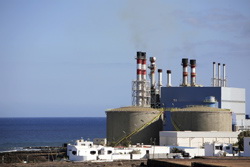
Many Mediterranean countries face a number of challenges related to water supply, due to an abundance of arid regions. On a positive note, some of their water needs can be met through the use of desalination based on renewable energy systems (RESs). However, wide-scale implementation of this technology presents certain economic, technical and policy obstacles. The EU-funded 'Co-ordination Action for autonomous desalination units based on renewable energy systems' (Adu-res) project brought together top EU researchers and selected partners from seven Mediterranean Partner Countries (MPCs) to study these barriers, and develop and implement strategies for overcoming them. The main aim of Adu-res was to push forward developments crucial to technology and policy for making the use of autonomous desalination units (ADUs) a practical and efficient solution to water resource needs. The project was thus designed to put in motion the critical mass needed to connect recent advances in research and development (R&D) with concrete solutions for RES-based desalination plants in dry Mediterranean regions. Starting with research and review activities, project members developed a research matrix, a tool enabling the exchange of research activities between relevant stakeholders. On-site research also contributed to collecting information on the current state of affairs in this area, with a comprehensive report produced and a computer model developed to support project planners and decision-makers at the local level. Integrated into existing MEDWATER software, the model offered users the ability to draw information about water management options of a particular area. On-site research was conducted in five MPCs to gather information on potential consumers of ADU-produced fresh water, with four consumer groups from each country being analysed. Researchers studied and evaluated possible financing mechanisms for autonomous desalination projects, conducted case studies of renewable energy-powered desalination practices and investigated the potential for reducing the capital needed to install and run small RES-powered desalination plants. They also analysed the legislative and institutional frameworks relative to applications of autonomous desalination in individual countries as well as on an EU level, and examined the possible social and environmental impacts of operating small desalination units in four south Mediterranean countries. Adu-res partners developed a simulation tool and analysed the energy performance of existing units in order to offer concrete recommendations for design improvements. Major outcomes and recommendations were communicated through dissemination activities, seminars and other events, and an exploitation plan was developed based on project outcomes and industry contributions. The technology for facilitating water resources management exists, and projects such as Adu-res promise to make its implementation a viable solution for dry regions and their suffering populations.