Modern information-sharing for scientific-historic inquiry

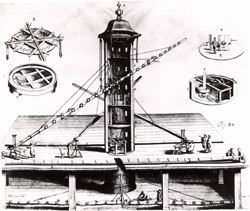
The Eastways of Science project was established to expand on the work of the Highways of Science project carried out by the same lead researcher during a Marie Curie Intra-European Fellowship. The earlier project worked to define and highlight the contents, networks and transmission of cultural and scientific information in early modern Europe. Towards this end, work focused on the construction of a prototype user-friendly multitask database. Information taken into account was acquired from scientific and learned correspondences such as personal biographies, scientific institutions and places related to scientific practices. Eastways of Science made efforts to overcome limits and difficulties previously encountered by those working in the field, through the creation of an electronic platform offering an online interactive environment. This would be the first application of Web2 system resources for an electronic archive of scientific-historical interest. Research also sought to extend the earlier project with regard to space, by taking into account the supposed 'periphery' of the 'Republic of Science': Rome, Florence, Paris and Danzig. As to building on the time aspect of the earlier project, Eastways of Science focused on the second half of the 17th century, when the experimental 'matter of facts', socially checked and shared through letters, was accepted as the foundation of 'new' science. Work was carried out within the shared web environment Pinakes 3.0 realised by the Museo Galileo and managed by the Fondazione Rinascimento Digitale, both in Florence. Fully in line with the project’s philosophy of resource sharing, Pinakes 3.0 is an open-source and free web application, allowing users to define and manage semantic models for gathering and sharing information across varied information sources. Among other activities, the project worked to populate the Pinakes web infrastructure through the building of a meaningful repository of letters. It established relations to navigate across resources, and strengthen the relevant research and even scientific community. Public conferences were organised for disseminating Eastways of Science objectives, methodologies and results, while collaboration with the Archive of the Pontifical Gregorian University and the University of Chieti in Italy, and the Johannes Gutenberg University of Mainz in Germany led to the establishment of the project ‘North-South communication(s) in early modern Europe’ (Noscom). Using the methodologies and technology developed by Eastways of Science, Noscom aims to realise a digital integrated archive of various sources to explore the circulation of knowledge between the Protestant North and the Catholic South of Counter-Reformation Europe.