Modified medical imaging for engineering design use

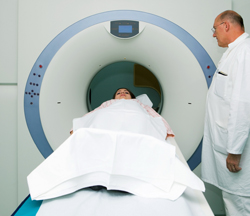
Growing demand for ever more specialised and tailor-made products has highlighted the importance of novel and efficient new product design and engineering technologies. Not only must technologies incorporate flexibility but they must also enable rapid delivery of high-performance products. In addition, such technologies should be equally useful at various steps of the product development process, enabling detection of flaws and material inhomogeneities as well. To address these needs, European researchers sought to develop a three-dimensional (3D) virtual modelling platform based on computed tomography (CT) via funding for the ‘New product design and engineering technologies based on next-generation computed tomography’ (Detect) project. CT enables reconstruction of a 3D model from 2D X-ray images obtained through a given axis of an object. Although 3D CT is commonly used in medical diagnostics as well as non-destructive testing, scientists sought to improve the speed and flexibility of the process to make it more useful to design and manufacturing. To this end, researchers developed novel hardware and algorithms for faster yet accurate scanning of parts with complex geometries and large sizes. Their goal was a 10-fold reduction in scanning time compared to conventional CT methods. Simultaneously, they created new image processing algorithms to load, visualise and process the very large data sets and convert them to Computer Aided Design (CAD) format rather than adapting available CT-to-CAD software. The Detect consortium also developed e-learning tools and demonstrations for various target groups to disseminate the novel industrial use of CT technology worldwide. At present, similar technology is employed primarily in the United States. Implementation of the Detect system should help European designers and manufacturers rapidly deliver tailor-made products geared toward individual user requirements, thus enhancing the competitive position of a huge sector of the European economy.