Europe’s facility for airborne research

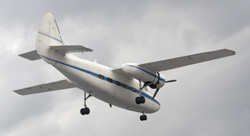
The ‘European flett for airborne research in the field of environment and geo-sciences’ (EUFAR) project was an integrated infrastructure initiative that joined 22 leading European institutions and companies involved in airborne research. The goal was to coordinate the network of research aircraft for exchanging knowledge and building a unified structure required for improving access to the infrastructures. Among EUFAR’s activities was the establishment of various committees for supervising scientific activities, management structure as well as coordination of transnational access. Expert groups were formed to promote best practice and investment in airborne instrumentation, and disseminate airborne research in the academic community. Within EUFAR it was possible to access 24 instrumented aircraft, including scientific and engineering support for integration of instruments, planning of field campaigns and data analysis. The EUFAR website provides users with a central portal to all facilities, aircraft and instruments, sources of funding and application forms for access. Nearly 100 young scientists have been trained and had the opportunity to design a field experiment, define the flight plan with the crew and participate in it and, finally, analyse the collected data. The consortium also jointly undertook the design and construction of a pod with instrumentation for aerosol microphysics. This could be flown on several aircraft and serve as a reference standard for inter-calibration of airborne aerosol instrumentation. EUFAR has proved a successful consortium which grew from five aircraft operators in the Fifth Framework Programme (FP5) to almost all major European operators of instrumented aircraft for environmental research in FP6. EUFAR is now recognised as the European portal for airborne research activities.