



Advancing Jewish historical literature

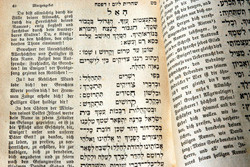
Rabbis, in their capacity as spiritual and scholarly heads, produced writings that reflected the cultural, religious, social and intellectual history of Jews. Furthermore, they contextualised these texts in the broader context of the Jewish experience during a specific period in history. Today's scholars use the rabbis' first person accounts and perspectives to provide better insight into this form of literature. These primary source materials are complex and require the assistance of an expert to understand them. Moravia's Jews greatly influenced Jewish life from the 16th to the 20th centuries because of the region's proximity to major centres of influence such as Bratislava, Budapest, Prague and Vienna. The rabbinic post occupied by its chief rabbi was one of the most prominent in Europe. Source material originating from Moravia is valuable for the study of its community's social and intellectual history. It is also worthy of examination in relation to other rabbinic literature. However, these precious sources have remained largely neglected since the 1940s. Funded by the EU, the 'Rabbinic literature in Moravia from the fifteenth to the nineteenth century' (RLMFNC) project researched Moravian Jews. Research involved the analysis of rabbinic literature written by or about the community during the particular time period. RLMFNC created an annotated bibliography of the studied sources. The project produced a selection of sources that was later translated into Czech. Also, scholarly articles have been published on the source material in English, Czech and Hungarian. The project's research results contribute to the understanding of the Jewish community of Moravia and advance the body of knowledge available on rabbinic literature. Project efforts have thus given fresh impetus to the exploration of Jewish primary sources.