



Theatre and Bohemian culture

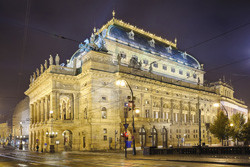
Following the Austro-Prussian war of 1866, German cultural identity in the territories of the Austro-Hungarian empire underwent evolution. Theatre was an important driver, yet study of provincial theatre has been neglected in spite of the art form's importance for cultural expression and questioning. The EU-funded project 'The theatrical landscape of Bohemia and Moravia as a space of negotiating cultural identities' (THEATLANDIDENT) investigated this. The study examined construction of the German-language theatrical landscape in Bohemia during the late 19th and early 20th centuries, emphasising drama's role in cultural expression. One goal was to examine the cultural practices that built a network of theatres, communities and individuals. Another ambition was to identify the discourses and narratives that extended the culture. The latter was pursued via discourse analysis of archive material. The study concluded in March 2013. Project work began with development of a suitable methodology. The resulting approach relied on the concepts of spatial turn and cultural mobility, combined with actor-network theory. Subsequently, the project described two case studies. The first illustrated the circulation of technology, specifically the electrification of one theatre in 1882, as a new experience of modernity. The second case study addressed the movement of around 80 individuals who applied to be director of a particular theatre between 1874 and 1917. Results showed the professionalism and standardisation of the applicants, also illustrating that opportunities for women in towns were decades ahead of the metropolises. The project ran training opportunities, consisting of university courses and PhD workshops. Research findings were presented at conferences. The THEATLANDIDENT project contributed understanding of how theatre in multi-ethnic Bohemian regions affected cultural productivity in general.