Elucidating malaria parasite motility

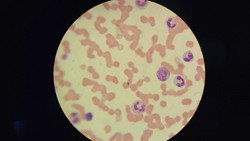
Plasmodium falciparum, the causative agent of malaria is carried through the bites of infected mosquitos into the bloodstream of humans. Current treatment entails the administration of artemisinin-based combination therapies. However, the emergence of drug-resistant parasites has urged the scientific community to revisit several aspects of the malaria parasite and find novel targets for therapy. Alongside that notion, the EU-funded 'Structural and functional studies on Plasmodium formins' (FORMIN) project set out to investigate the motility of the parasite during infection. Particular focus was given on formins, a group of proteins that participate in and regulate the formation of the actin cytoskeleton to control cell movement. Researchers successfully expressed and purified the two Plasmodium formin isoforms. Using X-ray-based methodologies, they were able to elucidate the structure of Plasmodium formins at low resolution. Although crystallisation studies are required to provide the detailed structure of the molecule, electron microscopy analysis revealed the ability of formins to bundle actin filaments. Formin 2 also interacted with profilin, potentially participating in the dynamic turnover and restructuring of the actin cytoskeleton of the parasite. The work by the FORMIN project offered a structural basis for understanding the mechanism of actin-based motility in malaria parasites. This information opens up new avenues for therapeutic exploitation through modulation of the parasite motility.