Novel targets against MRSA

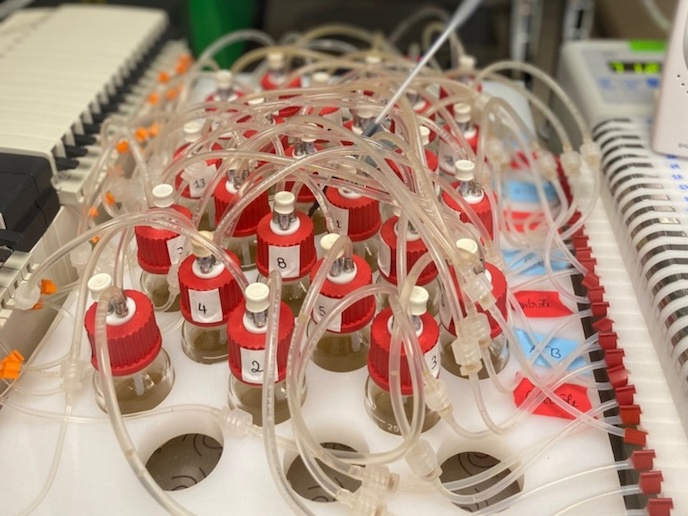
Staphylococcus aureus is a pathogen capable of causing life-threatening diseases. Its emerging resistance against most antibiotics, particularly the methycillin-resistant strain called MRSA, has made it imperative to determine the mechanism of host invasion and disease persistence. Our innate immune system helps fight S. aureus infections. However, S. aureus evades this line of defence by producing small secreted proteins capable of repressing the immune system. Given that in many infections, S. aureus grows in biofilm communities, the EU-funded 'Staphylococcus aureus biofilm dynamics and innate immunity' (SABDII) project set out to identify molecules that are expressed specifically during the biofilm mode of growth of S. aureus. To this end, researchers set up and studied several in vitro biofilm growth models. Apart from characterising the individual stages of biofilm growth, they measured the expression and secretion of immune evasion and immune stimulating molecules. Interestingly, they identified a group of peptides, the S.aureus phenol soluble modulins (PSMs) whose action was highly dependent on their concentration. At low concentrations they stimulated the immune system whereas at high levels they induced immune cell lysis. These findings were further supported by the generation of deletion mutants in S. aureus as well as overexpression experiments. These tools enabled the SABDII team to study the specific interactions of these novel proteins with the innate immune system. The identified molecules have the potential to serve as drug targets against S. aureus. Given the increase of MRSA incidences across Europe, these targets could be the solution against this problematic nosocomial pathogen.