


Industry backs Busquin's ambitious 2020 vision
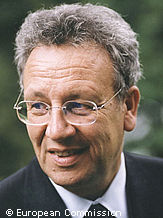
The 4th Aeronautics Days, held in Hamburg from 29 to 31 January provided a platform for many prominent figures to comment on Research Commissioner Busquin's '2020 Vision' report and the future of European aeronautics. Several themes were reiterated by the conference speakers and participants, including the need for common European goals, increased financial support for aeronautics research, enhanced cooperation between sectors and Member States and the need to reduce reliance on military research. 'We need to do two things. First we need to get a lot better at how we spend what there is, and secondly, we need to set up, between the Union and industry, a series of goals or principle points of a strategy, which in this particular case worry about where we want to be in 20 years time, but we then need to, between us, create a financial plan that will get us there,' Sir Richard Evans, CEO of BAE SYSTEMS and member of the 'Group of Personalities' responsible for writing the 2020 vision report, told CORDIS News. 'One of the important things that the Busquin report does is it brings together the industrial views and actually provides a clipped framework to which effort and energy within the Commission can be directed,' added Sir Richard. Indeed, Professor Volker von Tein, member of the executive board of DLR, the German aerospace centre, and one of the observers, who assisted in preparing the report for Commissioner Busquin, went so far as to say that it is the fact that such a report has been written that is more important than what the report contains. 'The process is more important than the content of the paper,' Professor von Tein told CORDIS. He went on to say that in preparing the report, 'more or less everybody was singing the same song', but that personally he would like to see the report go further, and he would like to see 'more speed'. This should be done by providing more financial support from EU funds, believes Professor von Tein, who added that 'more money gives power for coordination'. Further financial support was also urged by Richard Evans, who made a keynote speech calling for national governments to encourage investment in research. In an interview with CORDIS News, he again emphasised this point and added 'the problem we have today is that there is a disproportion of investment between Europe and North America [...]. We need to get a lot smarter, not only about how we create investment for the industry [aeronautics], but particularly how we spend it.' Rainer Hertrich, AECMA President and CEO of EADS Airbus also highlighted the gap in spending on research between Europe and the United States, and added: 'It is my concern to stress once again how much we appreciate the significant funds being spent on aeronautics technology by the European Union in the Fifth Framework Programme. But it would be unrealistic to assume that the gap between the US and Europe in overall R&D spending will remain without consequences in the global battle for competitiveness of our products in the long term.' The European Commission's Fifth Framework Programme was praised by many speakers, including Arne Wittlöv, Chairman of Volvo Aero and the Swedish Foresight Committee, and member of the 'Group of Personalities', who described it as a 'landmark': 'For the first time, Europe has a joint programme of sufficient size to act as a unifying force. It also introduced Technology Platforms (TPs) as innovatory types of large projects that allow technologies to be integrated and validated.' Several speakers, including Dr Werner Müller, Germany's Minister for Economy and Technology, expressed the hope of seeing an appropriate budget in the 6th Framework Programme. More money is however not the only precondition for the success of the European aeronautics industry, according to those speaking at the conference. 'Industry and politics need to go and in hand to be strong in the world. [...] In the aerospace industry it has always been clear that we need a unified Europe to compete with the USA,' stated German MEP Alexander Radwan. He referred to aeronautics research as an 'engine for integration', as, in this instance, 'citizens can see we need it.' Concern was also expressed at the past tendency to rely on the military for aeronautics research 'In the past, civil aviation benefited substantially from R&T in the military domain, that is largely funded by public money. Today, civil aviation needs its own technology focus. This is not only because the spin-off from military R&T is drying up, but also because civil aeronautics has to respond to the society needs for efficient, safe, environmentally- and user friendly air transport in order to accomplish sustainable mobility,' said 'Group of Personalities' member Arne Wittlöv. These sentiments were echoed by Rainer Hertrich, who stated that 'the industry cannot rely any longer only on military developments providing the quantum leap in technology', and Sir Richard Evans, who commented that the 'steady decreases in defence expenditure have been taking out of the basket without putting sufficient back in.' The creation of a Strategic Research Agenda, and an Advisory Council, to which Commissioner Busquin gave his personal commitment at Aerodays, was highlighted by several speakers as crucial. 'We need a Strategic Research Agenda for Europe constructed and agreed by all the relevant stakeholders. We need to establish the Advisory Council for Aeronautics Research for Europe [...]. And we need the Strategic Research Agenda to ensure coordination and complementary rather than duplicatory work across the funded European research programmes,' asserted Group of Personalities member Sir Richard Evans. The objectives behind the '2020 vision' are clearly very ambitious. Targets include reductions in carbon dioxide by 50 per cent and nitrogen oxide by 80 per cent, a fivefold cut in the current accident rate and a reduction of the time spent in airports to 15 minutes both before and after flying. Industry figures were however united in agreeing the necessity of this ambition in a market which is changing under pressure from increased competition and environmental concerns. 'The report has to be ambitious,' Richard Evans told CORDIS. 'If you don't reach out and look to make some serious change in the wake of progress, clearly you won't be at the forefront in this type of business in 20 years time.' 'The division between ambition, dream and hallucination is not always clear,' report writer Volker von Tein told CORDIS. 'A goal must be ambitious, but not obvious that you can never achieve it.'