


Liikanen advocates confidence but not complacency
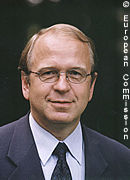
Europe can be confident about its knowledge economy, but must not be complacent said Erkki Liikanen, European Commissioner for Enterprise and Information Society, speaking at an SME Forum organised by the European Commission and the Swedish Presidency in Växjö, Sweden. The Commissioner outlined the progress that has been made since the objective of making Europe the world's most competitive economy was set in Lisbon a year ago. 'We must take a more balanced view of how the economy is developing and how new features are contributing to this development,' said Mr Liikanen. 'We can afford to be confident, but we must also act decisively in order to seize the opportunities that are available to us.' The forum, focusing on good practice in business support policy, is part of the European Commission's 'Best Procedure' programme, which aims to help Member States foster entrepreneurship by benchmarking and exchanging best enterprise policy practices. Sweden's Minister for Industry, Employment and Communications, Björn Rosengren, also speaking at the forum praised the Commission's proposal to compile the results and exchange of experience and benchmarking under the BEST Procedure. 'To attain GOOD Practice, we need BEST Procedures,' said the minister. Commissioner Liikanen reminded his audience that, since the Lisbon summit, scoreboards have been established for enterprise and innovation, a strategy has been developed to remove the remaining barriers to services in the single market and benchmarking and best practice exchange has been given a new impetus, most notable through the Commission's 'Best Procedure' programme. Work is still needed in several areas, Mr Liikanen stressed, notably in education, the fostering of a culture of entrepreneurship, the exploitation of ICT (information and communication technologies) and in design. 'Central to this new economy [...] is the exploitation of human knowledge and skills rather than the exploitation of plant and machinery or physical labour that characterised earlier phases of economic development,' said Mr Liikanen. Moving on to ICT, the Commissioner emphasised the importance of business to consumer communication, and business to business communication. He noted that progress has been steady, although noticeable slower than in the USA. 'We now need, in Europe, to quicken the pace of the exploitation of these new technologies and release their potential across the economy,' he said. '[The] liberation of the entrepreneurial spirit in new social groups is vital for the creation of the entrepreneurial society,' continued Mr Liikanen. He cited recently published statistics showing that Europeans are far less likely than North Americans to start a business if there is a risk that it might fail, and pointed to the need to encourage risk-taking in Europe. Design, as much as technological ideas, is part of the intellectual capital that is the basis of the knowledge economy, said the Commissioner. 'Design has been defined as the difference between doing something and doing it well,' he added. He stressed that it is the essential final step in the successful transformation of scientific and technical ideas into market winners, and urged further exploitation of the area. The message to the forum participants was that Europe needs top class practical support services, which are tailored to the needs of the new economy. This will enable the EU to meet the goals that it set for itself in Lisbon.
Countries
Sweden