


Foot and mouth vaccine research is vital, say American researchers
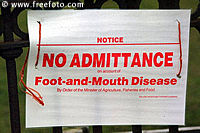
The spread of foot and mouth disease in Europe from the UK to France, Ireland and Holland has been accompanied by increasing concern in farming communities around the world and a heated discussion in the European Union over vaccination against the disease, which affects cattle, pigs, sheep and other livestock. But across the Atlantic, an American a team of scientists believes that further research can provide a solution. The dilemma arises because once an animal is vaccinated it is impossible to tell if it is actually sick because healthy animals carry the same antibodies as those which have been infected. As immediate detection of the disease is crucial to prevent it spreading, in 1992 the European Union decided to ban vaccination against food and mouth disease (FMD). Vaccination is also banned in other parts of the world including the United States and Japan and these countries' refusal to import FMD vaccinated livestock puts pressure on the European Union not to reintroduce the procedure, despite calls to do so from a number of stakeholders. The answer, according to a report in the latest edition of Science magazine, 'is a test that would separate vaccinated from infected animals,' or to develop broader vaccines that protect against more than one strain of the FMD virus. Vaccines which are currently available only target specific strains of FMD and need to be periodically topped up with boosters to ensure continued protection against the disease, bumping up costs. According to the report, an outbreak of FMD in just one county of California could cost up to 1.9 billion US dollars over a two year period if other countries refused its meat. These economic concerns serve to reinforce the urgency of further FMD vaccination research, it concludes.