


Weeding out obstacles to organic farming
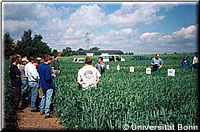
Work on a European project supported by the European Commission under the Fifth Framework Programme's 'Quality of Life and Management of Living Resources' programme, which seeks to improve weed control in organic farming has just got underway. The project, 'strategies of weed control in organic farming', or 'WECOF', will receive 2.2 million euro from the EU. Work is being led by the University of Bonn in Germany in coordination with partners from Scotland, Spain, Italy, Germany and Poland. The most important reason for carrying out such a project is that around 30 per cent of Europeans receive their water from sources which contain traces of herbicides from mainstream agriculture, project coordinator Professor Dr Ulrich Köpke told CORDIS News. The results of WECOF are therefore also fundamental for mainstream agriculture, he added. The project team will spend four years investigating how indirect measures of controlling weeks in organic farming can be improved. Herbicides are clearly not used by organic farmers. In comparison to herbicides, the effectiveness of direct methods of control for weeds, for example picking, pruning or thermal treatment are however significantly inferior, putting organic producers at a disadvantage. The researchers will tackle the question of how decisions relating to the amount of space that cereals have (adjusted according to the width of rows), the direction in which the crops are sown and the shape of the cereals affect weeds. The way in which cultivation in complete darkness affects germination and the development of weeds will also be investigated. The research should lead to the development of an optimum location specific method of weed control. Commercial plant growers will be involved in the project from the beginning.
Countries
Germany