


Scientists and the fishing industry must not become adversaries, say MEPs
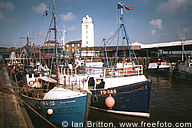
Scientific committees must not become adversaries of the fishing industry, MEPs stressed at a hearing on reports by the scientific committees for fisheries. A relationship of trust between the two sides needs to be developed said MEPs, who looked at different ways of reconciling the two often opposing positions. The aim of the hearing was to highlight the need for dialogue between scientists and representatives of the fishing industry so as to increase understanding and hence contribute fresh ideas to the process of change underway in the common fisheries policy (CFP). Greater cooperation must be forged in order to stop scientists and fishermen talking at cross-purposes, concluded MEPs. The main point of conflict between scientists and the scientific committee was the issue of how to conserve resources. Both sides were unanimous in wanting to see more funding for research. Philippe Mordiguet of the Scientific, technical and economic committee for fisheries highlighted the twin dangers of overfishing and insufficient replenishment of stocks. He called for stricter technical measures to protect young fish and for proper control measures to be introduced. Representatives for the fishing industry supported a simpler and more effective system for conserving resources, for example the use of transferable individual quotas. Etchevers Duran from the association of shipowners of La Coruña, Spain, highlighted contradictions between scientific reports on hake stocks and the amount of hake being caught, saying that the number being found in catches has actually increased in recent years, tripling yields, and that the size of the fish caught has actually increased. He urged the improvement of the scientific committees' operation, forcing scientific experts to take greater account of the experience of those working in the fishing industry. Miguel Lopez of the port of Celeiro, Galicia, Spain, called for reliable scientific studies and closer cooperation between experts, fishermen and public authorities. The pressing matter of recovering cod stocks in the North Sea was also discussed by those present. Scientists rejected a precautionary approach, saying the reproductive biomass has nearly fallen to the critical threshold, below which stocks will collapse. Any strategy to reduce fishing would however have a knock-on effect on catches of other species. The problem is further complicated by the fact that scientists do not and cannot know whether the exclusion zones for 2001 completely cover the areas where cod fry are found.