


Marine European Research Area proposed
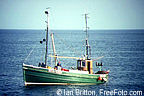
Marine technology researchers from across the EU are calling for the creation of a Marine European Research Area. Those working in the industry hope that such a unit will facilitate the coordination necessary for sustainable exploitation. Marine based industries and services account for between three and five per cent of European gross national product (GNP), to which they contribute approximately 200 billion euros per year. 'If marine research is going to be spread to all corners of FP6, a lot of coordinating effort has to be done,' said Ingvar Huse from DG Fisheries, summarising as rapporteur following a group session on marine research/technologies, bioproduction, fishery research and food safety held as part of the Norwegian Research and IT Forum in Brussels on 30 March. The event provided the opportunity for national representatives to present their positions on the future of European marine technology and offer support for the European Science Foundation's (ESF) Marine Board Position Paper entitled 'Navigating the future: Towards a Marine European Research Area'. Participants agreed that marine research should be integrated to form a marine European Research Area (ERA). They also agreed that marine research should be directed towards thematic areas, such as food safety and sustainable development. Delegates were however concerned about the best way to achieve this. The conference had difficulty in identifying provisions for research on natural marine biological growth, fisheries management, aqua culture, fish health and the coastal zone, Ingvar Huse summarised. 'More work is needed to secure Member States get demands for marine research covered in the best way,' continued Mr Huse, who added that a conference will be organised for later in the year in order to address this issue. The ESF's Marine Board position paper outlines why a marine ERA is thought necessary. 'Marine research has moved away from the traditional exploratory mode. Climate-relevant research, ocean ecology, environmental impacts and all aspects of operational forecasting, require systematic data collection over long periods. This calls for networks of land, sea-based and satellite observatories,' the paper states. 'In order to support this development, adequate commitments from policy makers and funding agencies are required. Coordination and long-term commitments must be addressed by a European marine science policy and will have to be built-up between ministries and agencies with responsibilities for marine affairs. The implementation of permanent observation systems has to be performed by collaborating large marine institutes.' Implementation requires networking and cooperation within national programmes, the launch of large-scale targeted projects, the participation of the EU in international programmes and close collaboration between industry and SMEs, states the paper. The proposal is strongly supported by an official Italian position paper on the subject: 'If we are to meet these growing needs by taking advantage of the oceans' bounty, while protecting our marine environment, and maintaining biodiversity, we must commit ourselves to a programme that will build on our current scientific achievements and develop European expertise for the future,' it says.