


Vision of cooperation set to become reality as JRC enlargement begins
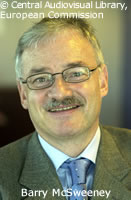
The scope of the European Commission's Joint Research Centre (JRC) is set to grow as work gets underway on research collaboration with central and eastern European countries (CEECs). Proposals are now being considered for the extension of a number of projects within the JRC's Fifth Framework programme (FP5) work programme to involve central and eastern European countries preparing for accession to the EU. The new programme of projects was drawn up under the guidance of Research Commissioner Philippe Busquin and newly appointed Research Director-General Barry McSweeney. It is hoped that the increased collaboration between EU Member States will help to smooth the transition to an enlarged European Union and represent the first steps to making Commissioner Busquin's vision of an integrated European Research Area a reality. The aim of the projects, for which an increased budget of 20 million euro has been allocated for the duration of the current framework programme (1998 -2002), is to increase collaboration and broaden the knowledge base of these countries prior to the envisaged EU enlargement. The projects fall under the two areas covered by the JRC's remit - the EC programme of research relating to EU policy and the Euratom programme of nuclear research. A total of 18 priority projects have been chosen, each of which are directly linked to the JRC's institutional programme. The projects selected had to address specific needs of the pre-accession process while building on existing JRC capabilities in its four main areas of competence - the environment, food and chemical safety, information systems and services and nuclear safety and safeguards. Priority was given to large projects to avoid the dilution of research effort over too many different actions. One of the projects chosen, 'Management of natural and technological hazards,' aims to tackle large-scale safety risks by creating central, compatible regional and national information systems to help authorities in pre-accession countries deal with emergency situations. The programme of research, to be implemented in collaboration with the JRC's Institute for Systems, Informatics and Safety, includes risk analysis and management for natural and technological hazards and risk assessment and recovery strategies for polluted land sites. These areas can be dealt with in a coordinated way as they both share risk related methodologies. The work will be carried out in collaboration with CEEC laboratories. It is hoped that the natural outcome of such cooperation will be further joint research proposals with the EU. In tandem with the increasing sustainable development focus of EU policy, a project on 'Environment and the solar resource' will also be implemented. This project takes its lead from the Commission's white paper on 'Energy for the future: renewable sources of energy', which calls for a 100-fold increase in the use of photovoltaic systems by the year 2010. It aims to involve pre-accession countries in an EU research action to assess their sustainable energy resources by quantifying the potential solar resources of the pre-accession countries and identifying suitable areas for the installation of photovoltaic technologies. The work will be carried out in co-operation with the JRC's Environment institute and Space applications institute. A number of projects will also be implemented under the Euratom remit of the JRC. One of these is the project on 'Combatting illicit trafficking of nuclear materials,' to be implemented in cooperation with the JRC's Institute for transuranium elements (ITU). The work aims to build on the ITU's expertise in the analysis of nuclear material of unknown origin by collecting data on illegal trafficking and establishing an internationally integrated strategy to combat the problem. In this way, the project will support the EU's objective of tackling cross border crime through increased international cooperation. The JRC is also becoming increasingly involved in joint shared cost projects between different research consortia. The JRC has been entitled to play a part in such collaborative efforts since 1994. During the Fourth Framework programme, the JRC earned about 20 per cent of its total budget through competitive activities, one third of which related to shared cost projects co-funded by specific EU RTD programmes. By participating in EU research consortia, the JRC builds strategic alliances with major industrial and academic partners and centres of excellence to exchange knowledge and keep abreast of worldwide research. In this way, the JRC can be seen as a focal point of cooperation for the promotion of European excellence rather than a competitor for public funds. Like most research organisations, the JRC also hosts students from both EU and associated countries - ten associated country experts are currently working on JRC premises. Successful PhD and post-doc candidates receive a grant for between one and three years.en the Netherland