


Mitsos hears Czech response to EU research plans
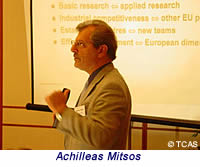
The accession of the Czech Republic into the European Union will be greatly assisted by its integration into the European Research Area (ERA), Achilleas Mitsos, Director General of the European Commission's Research DG, heard in Prague on 24 September. Mr Mitsos was attending a meeting of 250 Czech research stakeholders at the conference 'The Czech Republic and the next EU framework programme for research and development.' In the presence of representatives of the Czech government, national contact points, academics and research institute representatives, Mr Mitsos heard some of the main tenets of the Czech position paper on the next framework programme (FP6) and the ERA reiterated. These include concerns over the participation of smaller countries in FP6 integrated projects, which the Czech Republic fears could disadvantage countries with smaller GDPs (gross domestic products), especially in light of the proposed co-financing of some of these projects by participants. There was also concern over the structuring of networks of excellence, with a call for them to be organised on a 'bottom up' basis so that cooperation is not biased towards the interests of one core group. In a panel discussion and an open debate with the participants, Mr Mitsos also heard that Czechs would like to see the status and operations of organisations such as COST, CRAFT and EUREKA remain unchanged by the new framework programme. Particular emphasis was given to the need to address the problems specific to Candidate countries. These include the need to give SMEs (small and medium sized enterprises) help to establish themselves, in the form of spin offs, start-up financing and through strengthening the relationship between academia and business. It also called for research into areas which will be particularly pertinent to Candidate countries once they have joined the EU, such as environmental pollution, water management and industry restructuring.