


New technology sees rise in recycling rate
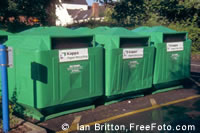
New technology has assisted the European paper industry in raising its recycling rate, putting the industry on course for meeting the target of 56 per cent by 2005, Esa Hyvärinen, Recycling Director at CEPI (Confederation of European paper industries) told CORDIS News. Increased investment in new production technologies means that more recovered paper is used in more products, said Mr Hyvärinen, who added that an improvement in the collection infrastructure and increased recyclability have also contributed to this increased rate of recycling. All three areas will be further developed in order to meet the target set a year ago in the European declaration on paper recovery. Mr Hyvärinen suspects further improving the collection infrastructure to be the most challenging area for the industry, particularly when addressing households. 'Technological development will play a major role in the future,' said Mr Hyvärinen. He spoke of EU-funded research projects, but said that it is currently too early to talk about what the impact of these projects will be. The first annual report on fulfilling the commitments outlined in the European declaration on paper has recently been issued. The main target of the declaration is to reach a European recycling rate of 56 per cent by 2005, which will involve the industry increasing the amount of recovered paper that it recycles by an additional ten million tonnes in real terms. The annual report reveals that the current recycling rate is 49.8 per cent in Europe, a figure 1.1 percentage points above the corresponding figure for 1999. 'The trend, which during the mid 1990s had stagnated, has been put back on target towards growth by the industry,' said Ulf Frölander, chairman of the European recovered paper council (ERPC), which has been established in order to monitor the implementation of the voluntary measures as set out in the declaration. The European Commission's Enterprise and Environment DGs participate in the committee as observers. 'We very much appreciate the transparency the industry is showing and consider it as a key to credibility, as well as the possibility to follow the work of the ERPC,' said Kim Holmström, Head of Unit for forest based and related industries in DG Enterprise. In addition to increasing the recycling rate, signatories to the declaration are also committed to improve technical, operational and environmentally benign solutions by stimulating and supporting research and development. Projects are currently underway as part of this objective, a substantial number of which are funded by the EU. The declaration also sees commitments to further reduce the generation of residues during all processes in the paper and board lifecycle, to improve the efficient use of raw and auxiliary materials, optimise collection systems by sharing expertise with those responsible for collecting recovered paper for recycling purposes and improve awareness of paper recycling by informing consumers about their role in closing the paper loop. Mr Hyvärinen believes the industry has been very successful in raising both the level of information and the awareness of the need for recycling since the signing of the declaration in 2000.