


Tackling the public's distrust of science
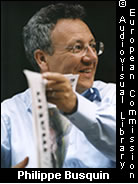
Research Commissioner Philippe Busquin spoke on 7 November of plans to produce guidelines on risk management, the application of the precautionary principle and communicating risk to public, in order to tackle the general public's distrust of science. Speaking at the University of Florence in Italy, Mr Busquin talked of ways of improving links between science and society, thus increasing knowledge and reducing uncertainty among Europe's citizens. He highlighted the importance of improving scientific education, media coverage of scientific issues, access to scientific information, holding scientific forums and boosting the participation of women in science. 'In a certain sense, science has become a victim of its own success,' said Mr Busquin. 'It is described as 'correct', and believed to hold the answer without ambiguity. However, it is important to understand the significance of scientific uncertainty,' said the Commissioner. He went on to say that such uncertainty is what actually motivates scientists to carry out their research, but admitted that the public does not normally regard ambiguity in the same light, particularly when it presents possible risks to health and security, he continued. It does not help when scientists disagree amongst themselves, he admitted, adding that these uncertainties are intrinsic in research. Mr Busquin announced that the Commission will next year launch a new initiative to encourage Member States to share information across Europe on participation procedures with regard to the public and political decision making. 'The public, as individuals or members of representative organisations should have a real chance of influencing the decision making process,' he said. 'In the area of biotechnology in particular, which affects health and the environment, we have already seen that once mobilised, public opinion can become very hostile.' Lots more remains to be done, admitted Mr Busquin. He spoke of using more 'hands on' mechanisms for the popularisation of science: open door days, science festivals and science weeks. He also said that the Commission envisages helping scientists to participate in regional and inter-regional fora on themes of interest to the public, such as the environment, health, security and transport. One way of increasing the public's knowledge and understanding of science would be to improve relations between scientists and the media, said Mr Busquin. 'We have to [...] examine carefully the interface between science and the media. Even without deliberate sensationalism, lots of damage can be done by well intentioned but badly informed reports covering scientific advances,' he said. The Commissioner talked of trying to stimulate a better communication of science to the public by drawing up new guidelines and creating a European award system for science journalists. He added that the Commission is in the process of examining ways of improving access to high quality scientific information for both the public and journalists. He added that it is not only the quality of scientific information, but the quantity which is important. 'We are also examining how to increase the quantity: not only by helping in the production of science programmes, but also by helping with their diffusion across Europe and their translation into the appropriate languages,' said the Commissioner.