


IRC conference hears of future plans for innovation and the Framework programmes
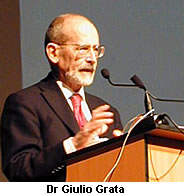
The network of European Innovation relay centres (IRCs) was reassured of its future by Enterprise DG deputy director general, Heinz Zourek, at its annual meeting in Marseilles on 22 and 23 October. Also at the conference, Dr Giulio Grata, Director of the Innovation Directorate, explained the shape of the proposed Sixth Framework programme (FP6) and broke the news that the Innovation-SME programme would not continue as a separate programme. Speaking of the need for rationalisation and streamlining of networks Mr Zourek described the need for a common electronic platform that could be shared by the network operators, and for the development of some common basic services, such as diagnostics and signposting for the various EU networks, including IRCs, Euro Info centres (EICs) and Business innovation centres (BICs). He assured delegates that the IRCs were seen as an essential element of FP6 and that the emerging plans, including the possibility of a common branding for the Commission supported networks, were due to be discussed with Commissioner Erkki Liikanen on 8 November at the 'European conference of EIC host structures' in Brussels, where 500 participants were expected. Dr. Grata then spoke about the overall plans for FP6 and in particular area 2: 'structuring the European research area', which encompasses research and innovation, human resources and researcher mobility, research infrastructures, and science/society issues. The action 'Research and innovation' would be the main action of concern to those involved in technology transfer and exploitation. Six types of activities are foreseen under the 'Research and innovation' heading, he explained: - Networking of stakeholders in the European innovation system and carrying out analyses and studies to promote exchanges of experience and good practice. - Actions to encourage trans-regional cooperation regarding innovation and support for the setting up of technology businesses, as well as for the preparation of regional strategies. - Actions to experiment with new tools and new approaches concerning technological innovation. - Establishment or consolidation of information and assistance services relating to innovation. - Economic and technological intelligence activities. This work comprises analyses of technological developments, applications and markets, followed by processing and dissemination of information in order to help researchers, entrepreneurs and, in particular SMEs and investors, in their decision making. - Analysis and evaluation of innovation activities carried out within Community research projects, and exploitation of lessons which can be drawn. Mr. Grata then referred to the current Innovation programme, also supporting the analysis and benchmarking of innovation policies and performances in Europe. He explained that continuous work of this nature is foreseen under the 'Strengthening the foundations of the European research area' (area 3) activities. Specifically, this includes the benchmarking of research and innovation policies at national, regional and European level. At present much of this work is gathered under the project 'Trend chart on innovation in Europe' . 'Innovation no longer needs a separate Programme,' he said, 'and indeed a separate identity could be counter-productive.' He went on to say that innovation has now been raised in the political profile and has now become an essential element of all FP6 actions. The conference was also presented with the results of an independent strategic study which showed the continuing need for IRCs and put forward suggestions for future action. The further development of professionalism in IRCs through training and quality measures was a recurring theme of both the report and the parallel sessions at the conference. The study finds that there is still a market failure in terms of transnational technology transfer (TTT) support services and that this could be filled by a quality IRC network. To achieve this, the study recommends that the key objective should be to attain and maintain a high quality of service in TTT delivery to clientele. This however must be supported by two subsidiary objectives, namely to attain tangible economic benefits for clientele though successful TTT and to address TTT capability deficits in disadvantaged regions. Efforts will therefore be oriented towards building a stronger TTT capability across the network whilst attempting to achieve better value for money results. The IRC network has grown steadily in size and strength, and now covers 30 countries. More than 1,000 experts in transnational technology transfer have already helped to bring to completion around 900 licensing, distribution or co-development deals between partners in different European countries. Altogether, almost 250 partner organisations are involved, ensuring a local presence in most regions of Europe. The sixth annual IRC conference attracted over 300 participants over three days.