


Candidate countries describe boundaries to Framework programme participation
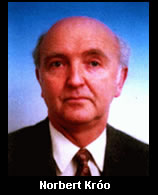
The necessity of networking centres of excellence, building up strong partnerships and improving research infrastructures was highlighted as vital if candidate countries are to have a realistic chance of participating in the EU's Framework programmes. These conclusions were drawn at an expert seminar on the Central and Eastern European countries' involvement in the Framework programmes on 26 November, organised by KoWi, the German research and development (R&D) liaison office in Brussels. The seminar was attended by representatives from research institutes, research ministries, universities, the European Commission and other Brussels-based R&D liaison offices. The event included presentations on the European research area (ERA) in the context of enlargement, candidate countries' hopes for the Framework programmes and the results of two studies on the participation of Central and Eastern European researchers in the Framework programmes. Summing up the seminar, KoWi director Martin Grabert said that there was one clear message: 'It is essential to find partners, good and reliable partners. Trust building actions should be a focus in constructing FP6 [the Sixth Framework programme], both from the Commission and from the Member States,' he said. Summarising other points which had been raised during the presentations and discussion, Mr Grabert said that there was a strong need to continue the activities of centres of excellence in FP6, and that when the European Commission organises expert seminars, candidate countries must be involved. It is important to offer young people chances and to enhance their participation in research, added Mr Grabert. As part of its 'Fit for Europe' project, which aims to assist candidate countries in their FP5 involvement, KoWi had distributed a questionnaire to candidate country researchers. The questionnaire aimed to obtain both objective information on FP5 involvement and opinions of the researchers involved or seeking to become involved. Presenting the project, coordinator Piotr Swiatek emphasised that the questionnaire would have taken around two hours to complete, but the response rate was nonetheless between ten and 40 per cent for each country, thus demonstrating a 'real interest in the issue'. Interestingly, the highest response rate was from the candidate countries experiencing the most difficulties in meeting the Commission's targets. The survey indicated that the majority of respondents have a good knowledge of European funding mechanisms and wish to have further training, 78 per cent believing it would be beneficial to have this training in other countries. The completed questionnaires also highlighted difficulties however. Limited possibilities for contacting parties in the Member States make cooperation with the EU difficult. The main barrier to FP5 involvement is a lack of motivation among candidate country researchers, according to the survey, which the respondents believe to be caused by a low success rate in terms of proposal acceptance in the candidate countries. Jana Körner presented the results of her study on the experiences of Polish researchers in EU environmental research. Most of those interviewed had either been a project partner or a principal contractor and nearly 70 per cent found the information they needed to apply on the CORDIS website. Nearly all respondents expressed the belief that participation in an EU project plays a major role for extending contacts and networks. Most had links with other research institutions, although more national than European institutions and 80 per cent collaborate with industry. The Polish researchers highlighted a number of areas which they believe act as boundaries to full participation in EU projects, these include a lack of necessary equipment, poor relations with foreign researchers and a lack of foreign language skills. Ms Körner also cited a tendency among Polish researchers to be pessimistic about FP6 as they are 'under the impression that FP6 will only fund large projects with experienced teams, which would put Poland at a disadvantage.' 'Both studies show the Commission went a bit far in preparing FP6 when stating that all countries are equal already,' said Martin Grabert. Although much remains to be done, by both the candidate countries themselves and the Commission, a lot of progress has already been made. The candidate countries have all been involved in discussions on the forthcoming FP6. Although unable to vote, all candidate countries have the right to participate in CREST meetings, the committee on scientific and technological research, where they are able to voice their opinions. Many candidate countries have also submitted position papers to EU Research Commissioner Philippe Busquin. 'EU accession is the main driving force,' said Jerzy Langer, vice president of Euroscience, and member of the Polish academy of science. He said that this has lead to entrepreneurship among the younger generation, foreign investment and bilateral links. On the negative side, he highlighted the industry research paradox, explaining that there are still many research institutes working without industry and industrial centres without a local R&D infrastructure. Norbert Króo, Secretary General of the Hungarian academy of sciences pointed out another paradox, the 'European innovation paradox', whereby although R&D is in good shape, the results of this are not reflected in the economy. 'We still have negative trade on high technology products and increasingly on low technology products,' he said. All participants agreed that the candidate countries must work more on harmonising their national research programmes, improve their infrastructures and increase R&D spending. Andrzej Siemaszko, Director of the Polish national contact point (NCP) suggested that the candidate countries implement a 'stairway to networking', twinning Central and East European research centres with those in Member States, creating links to networks of excellence in Europe, networking at national and regional level, revitalising networks and cooperation with the newly independent states and establishing cooperation with the Joint Research Centre (JRC). Christian Paterman, Director of the Research DG's 'preserving the ecosystem' directorate said that the candidate countries should also make more use of stagiere positions (temporary trainee positions within the European institutions) and encourage more researchers to become evaluators for project proposal submissions. He said that the Commission senses a resonance where this is concerned. He finished by saying 'don't forget, any transition period is difficult.' Participants agreed that the Commission too must play its part. 'Collaboration has to start from the inception of the programmes. The candidate country researchers must be present at take off if we expect them to be interested in the landing,' said Norbert Króo. Mr Langer also called for the use of cohesion and structural funds to finance the upgrading of research infrastructures, saying that 'in Poland, almost every euro is backed up by a Polish euro, which shows how much good you can do, how much influence you can have.'