


ESA satellite to provide key global warming data
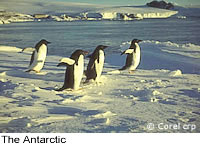
The European space agency (ESA) has signed an industrial contract with space company Astrium for the construction of the new European environmental and climate satellite CryoSat. The launch of CryoSat, planned for April 2004, will provide climate researchers with previously unavailable data from uninhabited polar regions. Once launched into polar orbit, the satellite will measure changes in the thickness of polar ice sheets and sea-ice cover in polar oceans with unprecedented accuracy. The contract, signed by ESA's Director of earth observation José Achache, and worth around 70 million euro, involves a number of European partners, including Alcatel Space Industries. Cryosat will aim to fill crucial gaps in the climate research of today by providing the first precise measurements of polar ice and its development. At present, global warming experts predict temperature rises ranging from 1.4 to 5.8 degrees. This would lead to a thawing of polar ice and glaciers, which could in turn cause a rise in sea level of up to one metre. Polar ice plays a key role in determining the global climate. Despite being thousands of kilometres from the most inhabited areas, the ice plays a determining role in climate through three important factors. Firstly, snow and ice reflect sunlight very effectively, and if ice cover is reduced less sunlight is deflected and the polar region warms up. This can lead to a self-accelerated warming process as more ice melts. Sea-ice cover also plays an important role in regulating the Earth's temperature by forming an ice 'blanket' which prevents night-time heat output from the ocean. This effect is reduced as ice shrinks or thins. In addition, large amounts of thawing ice can affect ocean currents by adding large amounts of fresh water to the sea and disrupting the pattern of existing currents. CryoSat, circling the Earth in a polar orbit 720 km high, will use its radar and two antennae to scan the surface of the ice with an average accuracy of between one and three centimetres. The satellite will form the first 'Earth explorer' mission of ESA's Living Planet programme, created in 1998. This science-driven programme aims to provide data on key scientific issues. It involves a series of core missions involving Earth observation satellites, and opportunity missions, using more mature technology currently available in industry.