Better understanding of nanotechnology and its implications for neuroscience

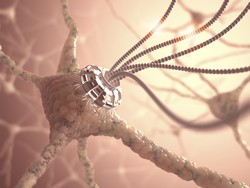
Neuroengineering, an emerging area within neuroscience, assists in repairing, replacing and enhancing damaged neuronal tissue. Due to the unique anatomy and physiology of the central nervous system (CNS), devices designed to deal with damaged CNS tissue and to develop innovative brain-machine interfaces face several challenges. Carbon-based nanomaterials are seen as holding the most promise to increase understanding of the brain and ultimately lead to a new generation of nanomedicine and prosthetic applications in neurology. With this in mind, the EU-funded INCA-NANEP (Interfacing carbon-based nanomaterials to neurons: Toward new horizons in cellular neuroprosthetics) project examined the interface between carbon-based nanomaterials and neurons. The focus was on neuroprosthetic materials that are applicable to cognitive and regeneration/repair applications. Project partners characterised carbon-based nanomaterials for their foreseen biological applications. They successfully demonstrated the biocompatibility of these materials, and their coupling with neuronal networks was investigated by using electrophysiological methods. Two papers were published in leading journals and others are currently being prepared. Project outcomes were presented at seven international conferences and meetings. In addition, several collaborations were established, leading to the development of new scientific proposals to attract funding from programmes such as Horizon 2020. INCA-NANEP helped to broaden knowledge of nanotechnology and its applications on neurosciences. In doing so, it should pave the way for the next generation of tools, regenerative implants and smart electronics in deep brain stimulation therapies.