


Research networks are key component of ERA and innovation, says Liikanen
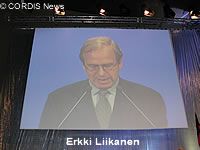
Enterprise and Information Society Commissioner Erkki Liikanen has highlighted the importance of research networks for research, the European research area (ERA), innovation, deregulation and international cooperation. Speaking at the Global research network summit and GÉANT commissioning event in Brussels on 22 May, Mr Liikanen spoke of the 'immense contribution that GÉANT and research networking in general are making to the realisation of a knowledge-based society in Europe.' He noted that since its inception, GÉANT has interconnected some 32 European countries 'and is therefore a little ahead of our broader political integration.' Research networks are a tool for research, and constitute a key component of the European research area, he added. 'They bring together researchers from all regions of Europe, softening disparities and easing access to sources of information and processing power.' He continued by saying that research networks are also a 'driver for innovation' as they 'support thousands of online researchers that are seen to be the 'avant-guard- of the Internet, pushing available technology to its limits.' By promoting competition for broadband infrastructures and services that will be provided commercially in the future, research networks are also a 'benchmark for deregulation in Europe,' said the Commissioner. Mr Liikanen also called for significant upgrading of Europe's research infrastructure so that Europe can compete successfully with its competitors. Referring to the ambitious pledge by Heads of State and Government at this year's Barcelona Council to devote three per cent of their GDP to research, development and innovation by 2010, Mr Liikanen said: 'Given such determination in Europe to establish, maintain or reinforce leadership in key research fields, a continuous and more vigorous upgrading of the underlying research infrastructure is required. This should utilise the latest state-of-the-art technology, which is often not yet commercialised on a large scale.' Highlighting the importance of research networks will take on in the Sixth Framework programme (FP6), Mr Liikanen noted that related topics will receive double the amount of funding allocated to the fields under the Fifth Framework programme (FP5). The aims of this funding increase are to: - reinforce broadband communications networks for researchers, attaining 100 giga bits per second and moving towards terabits; - interlink the European research infrastructure with similar infrastructures in other parts of the world, ensuring a coherent global approach; - develop high performance GRIDs to support the establishment of European virtual co-laboratories; - promote large scale experimentation on next generation networks. 'Such research objectives demand an ambitious vision and a reinforced commitment from the stakeholders,' said Mr Liikanen.