The molecular mechanism of protein aggregation

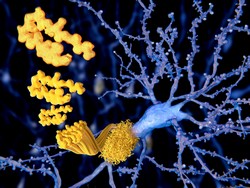
Alzheimer's disease is a neurodegenerative disorder associated with the accumulation of insoluble fibrillar protein aggregates, known as amyloids. Although these cause neurotoxicity, the precise mechanism remains elusive. In turn, this hampers the development of effective treatments for Alzheimer's disease. The primary objective of the EU-funded PRAGTO (Protein aggregation and toxicity in human diseases) project was to understand the association between the pathophysiology of neurodegeneration and amyloid plaque formation. To this end, researchers developed two innovative techniques, namely a novel microfluidic-based technology, and a chemical kinetic platform to measure the rate and identify the molecular mechanism of aggregation of amyloid oligomers. This was achieved by quantitative kinetic assays and global fitting analysis. Scientists observed that targeting different microscopic events had diverse consequences on aggregate formation, making it possible to identify the best modality of intervention. One molecule was discovered that could target the key step in the aggregation process of Abeta42, the peptide closely associated with Alzheimer's disease. This was the first identification of a target in the aggregation process that could be exploited therapeutically. Collectively, these findings underscore the potential of the PRAGTO platform at identifying targets in the aggregation process that cause the observed toxicity in neurodegeneration. Future studies towards the discovery of potential drug candidates of protein aggregation could revolutionise treatment of debilitating disorders such as Alzheimer's and Parkinson's disease.