


Liikanen tells Northern eDimension forum of challenges posed by enlargement
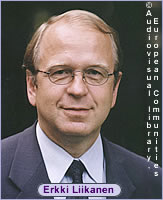
In his address to the international Northern eDimension forum in Pori, Finland, on 11 November Mr Erkki Liikanen, Commissioner for Enterprise and the Information Society, outlined the challenges posed by EU enlargement, and emphasised the importance of the Northern eDimension action plan in meeting the challenges facing that region. 'We are on the verge of a historic reunification in Europe,' the Commissioner said 'The outcome of the Brussels European Council two weeks ago is a big step forward. Enlargement of the European Union brings challenges to all countries in the northern region. The effects will be felt practically in all aspects of life.' The Northern Dimension covers the Baltic Sea region, and includes the EU countries in that area, as well as Estonia, Latvia, Lithuania, the Russian Federation, Poland, Norway and Iceland. Mr Liikanen outlined how a competitive economy is capable of providing increased productivity, generating wealth for citizens and increasing the GDP per capita. 'A nation's wealth derives firstly from high employment and secondly from productivity growth. Once the employment rate has reached its limit, productivity growth remains the source for catching up with global competitors. That makes productivity growth so essential,' he said. In order to increase productivity, the Commissioner said that 'information and communications technologies (ICTs) and their productive usage will have to play an important role, as an enabler of innovation and in streamlining business processes.' He explained that in order to fully reap the benefits of ICTs in terms of productivity growth, three pillars must be in place. Firstly, investment in ICTs themselves, followed by a re-engineering of activities and organisations, and, lastly, by increased investment in human capital. The key instrument to promote these strategic goals in the EU has been the eEurope policy initiative. The eEurope 2005 Action Plan aims to improve public services, increase transparency and accountability, and provide easier access to ICTs for citizens. The launch of the eEurope+ Action Plan for accession countries last year, said Mr Liikanen, 'demonstrates that the candidate countries share the EU's political commitment to embrace these challenges.' The plan adopts all the strategic goals and objectives of its eEurope counterpart, but is adapted to the particular needs of the candidate countries. The Northern eDimension Action Plan, scheduled to run until 2004, is a tool to facilitate the Baltic Sea region's transformation into an information society. It is based to a significant extent upon the eEurope and eEurope + plans. 'The fact that the northern region is a very mixed area in terms of economic development, social cohesion, cultural ties, regulatory framework and business climate is a challenge,' the Commissioner said 'But it also provides us with an opportunity for motivated cooperation and transfer of knowledge. Active participation of the private sector in this task is of vital importance. Northern eDimension should be attractive to businesses.' In summary, Mr Liikanen said: 'The situation in the Northern Region is still very mixed, and several of the countries have some way to go. It is important that we now move to concrete projects. Effective networking between different players together with larger initiatives would bring about increased visibility and effectiveness.'